amanda beth online

  • Subscribe to our RSS feed.
  • Twitter
  • StumbleUpon
  • Reddit
  • Facebook
  • Digg
Showing posts with label writing. Show all posts

Friday, 21 February 2014

Reflections of a Writing Teacher!

Posted on 03:00 by the great khali

     I have spent the past two weeks agonizing over what I could say in this post that would make it worth your time. I am not sure I ever came up with anything awe inspiring, or earth shattering. It seems that there are already so many fantastic ideas being tweeted and pinned that I am not sure there IS much left to post or tell about! Oh, I know that in our rooms we tweak and alter old ideas putting our own little "kiss" of uniqueness on it and present it as new. This is one of the best parts of being a teacher- taking ideas and making them our own.
     I have been a nervous wreck with the end of the year looming and state testing starting soon. The great state of Utah has decided to test each grade 3-11 with TWO different writing assessments this year. These scores will be a key component in our school grade, along with our newly redesigned state CORE test, which is called SAGE.
     Why the stress you ask? I am the writing teacher for the 4th-6th graders in our building- ALL 64 of them! AAAAAAHHHHHHHHHHHHHHHHHHHHHHHHHHHH!!!!! To top THAT off, my 5th graders are required to take a third writing test this year as well during the transition to the new SAGE Writing tests.
    We (the 5th graders and I) have been working night and day to be ready for this test. The students will be given a prompt along with two articles about it (one pro, one con). They must then form an opinion, write a 5 paragraph essay, and quote text from the article to support it. Phew...
     Like most of you, I have many low readers and writers, many of whom are ELL and are still working on making a complete thought in a sentence.
     During all this practice, I had the students write to a prompt that I made up. The prompt was whether the students would rather have a 3 day- 10 hours of school day, or a regular 8am-3pm school day (with our current 1/2 day Fridays still in place). Here was the resulting 4 Square (more on that some other time, if you aren't familiar with 4 Square writing check it out- it is amazing!) from one of my students.


     I typed this student's work up with no name so we could analyze it with out fear or being made fun of. The students were really good about not asking whose it was, and the owner never once let on it was his/hers. PERFECT!
     We discussed it and then students worked in pairs to write out the paragraphs. I was feeling really good about where we were heading with all this.
     Next, I brought in the Scholastic Story Works Debates. They WORK PERFECTLY! They present an issue and then share the pros and cons. The students make notes about both sides, and then choose one. I have been extending that to have the students create a 4 square and write a 5 paragraph essay.
     Is it working? I  honestly don't know. I have been pushing them so hard that I am not sure what will happen on Tuesday.
     BUT...
     The last two days we have just stopped the stressing and have been having a blast doing OTHER types of writing. The students have been more excited about writing and it has been a great break. Monday we will head back for one last practice session, and then on to the big test.
     I have come to realize that I can only love them and guide them- the rest really is up to them. I have been in denial for many years thinking if I just care more or do the activity in 10 different ways they will want to learn. The reality is that I only can do my best to meet them where they are and then they have to pick up torch and run with it.
     Thanks for listening to my thoughts, worries, and hopes! I LOVE teaching and HATE it at the same time. But, I have great hopes for this class on this test. They are excited for it, they have worked hard for it, and they are going to ROCK IT!
    Here is to a very happy Friday and a Relaxing weekend-

~Mr. Hughes


Read More
Posted in Created by MrHughes, Standardized Testing, writing | No comments

Thursday, 2 January 2014

A New Year...Freebie

Posted on 21:00 by the great khali
It's a new year, everyone! I trust everyone has had a wonderful, relaxing break. I know I have enjoyed relaxing a little and spending time with my family. This week I have been busy gearing up for the journey back to school. We start back on the 6th with a Teacher Workday. The students return on January 7th.

In celebration of ringing in a new year, I am giving away my January Writing Bundle to three lucky readers. To enter, simply leave a comment on this post with your email address. I will randomly select three winners from the comments.


January Writing Bundle

For everyone else looking for something for the kiddos to do when they return, I have a freebie It's a New Year {Writing Activity} ready for your to download. Don't forget to enter the giveaway! I will choose a winner on Saturday morning.

I wish everyone a Happy New Year! 


Read More
Posted in Andrea M. Bentley, Giveaway, Right Down the Middle, writing | No comments

Friday, 29 November 2013

Guest Post: Collaboration Cuties, How to Use Mentor Texts

Posted on 03:00 by the great khali
Hey there!!  This is Amanda from Collaboration Cuties and I am so excited to be guest blogging here today!!

Today, I wanted to share with you how we use mentor texts in our classroom!  If you follow our blog at all, you know that we loooooove mentor texts!  We have a linky each week devoted to it!  If you haven't stopped by to see all of the amazing texts linked up, start HERE  (after reading this post!) to check out what we've been up to!!  Be warned!!!  I had to switch to an Amazon Prime account after we started this linky because there were so many great texts linked up that I HAD TO HAVE RIGHT THEN!  ;O)

Okay, so on with using mentor texts...I  know that a lot of upper elementary teachers are departmentalized, so it may be that this particular book isn't something you might use, but you will get the general feel for how you could use any mentor text, no matter the subject area you teach in!

The book I want to tell you about is called Roanoke, The Lost Colony by Jane Yolen.  Jane Yolen is definitely one of my favorite authors because she is amazing at writing historical fiction!


We are just getting started with our unit in Social Studies on the Thirteen Colonies, and I am launching it with this book.  Here is the description from Amazon:

In 1587 John White was chosen by Sir Walter Raleigh to lead a new colony at Roanoke off the Atlantic coast. After bringing many men, women, and children to the new land, White went back to England to gather supplies for the long winter. But when he finally returned to the fort almost three years later, he found that all of the colonists had vanished. The only signs of life left were the letters CRO carved into a tree and the word CROATOAN carved into one of the fort's posts. Some people think that the Spanish army captured the colonists; some people think that the local native people murdered them; others think that the colonists went off to live with the native people and start a new life. Still others think that the colonists tried to sail home to England and were lost at sea. No one knows for sure. 

When I use the term mentor text, I am talking about a text that will be used for more than one reading or lesson.  Usually, if I truly wanted to use a book as a mentor text, I try to use it over a week long period.

In planning to use this book, here are the lessons I would use with it.  Since each of us has different amounts of time for our language arts block or social studies block (or whichever subject you teach), I will just number the lessons since we would all have to do it at our own pace that works within our classroom.  :O)

Lesson 1
First off, I would read the book in social studies.  I am using this as a launch for the unit, so I want to make that social studies connection.  I would not read the vocabulary yet...that comes in lesson 2.

While reading the book, I would have my students fill out a FQR chart.  I could type out one for them, but since we use interactive notebooks, I would have them complete this in their journals.


The purpose of a FQR chart is to engage students with the text and get them thinking and questioning what they are reading (or hearing read).  They write down facts in the left column, questions they have about the fact in the middle, and if they find a response in the text, they can fill in the response column, or, they may have to make an inference.  Here is an example we might write while we are reading the text.


Now, this text has some great features to it.
From Roanoke, The Lost Colony
Each set of pages has a "sticky note" with vocabulary words on it from the passage.  It also has facts on the spiral bound page (like the one on the left) that gives even more information.

So...

Lesson 2
Vocabulary-  There is a lot of great vocabulary highlighted in this book (and she put it on sticky notes, which I love about her!).  So, I would read the book again, but focus on the vocabulary words.  We would complete a vocabulary chart in our reading notebooks using these words.  

We've used a chart as simple as this (yes, I know it's not very cute...)   ;O)
Or, one like this, which you can get in our TpT store for free by clicking on the picture.

Depending on which organizer I used, I may have them inference what the word means, or I may just read the sentence it is in and have them use context clues BEFORE reading the definition on the sticky notes to check their thinking.  I would also take the time to point out how Jane Yolen inserted the definitions cleverly throughout instead of at the end in a glossary.

Lesson 3
We are working on informational writing right now and I would ask students to go back into their rough draft, and decide how they want to highlight key vocabulary.  Some may have already highlighted them, while others may be making a glossary.  Now, they have another option to try in their own writing!

Lesson 4
Close reading- Here, we would do a close reading of this page in the text.  This is the first page.  I would photocopy this (since one page is allowed to be copied from the book) and we would paste it into our journals.


First off, there is quite a bit of vocabulary here that is not defined in the book.  We would discuss this.  Then, we would discuss cause and effect, highlighting causes in one color and the effects in a different color.  


Some of the sentences state events that could be a cause and an effect.  We would write those in our journals as both, showing their relationships.  For example, the passage says that the native people were infected with European diseases.  Well, the colonists coming to their land caused this.  But, since they were infected with the diseases, the effect (that isn't stated) is that many of the native people died.  We would add this in our reading journals.

There are several pages in this text that could be used for this skill.  A few pages after this first page, there is another passage with less information.  This would be a great passage to use to differentiate in small groups with a lower reading group.

Lesson 5
Writing-  I would have them write in their writing journals about what they think happened at Roanoke and to use evidence from the text, and what we had been learning, to support their thinking.  At the end of the book, there are theories that Jane Yolen shares about what may have happened.  Also, with writing, I would have them write about whether they think John White made a good decision to bring colonists with them and then to leave them, using evidence to back up their thinking.  

There is also a timeline, so this is a great text feature to share with students.  They can easily make a timeline as we start our colonies unit and continually add to it as we go along in social studies!

Other Activities:

We use mentor sentences in our classroom to teach grammar within writing.  If I were to choose a sentence from this book (which was really hard!) I'd choose this sentence:
On August 18, White's daughter Eleanor gave birth to Virginia Dare, the first English child born in America.
I would choose this sentence to work on the following grammar skills:  capitalization, dates, possessive noun, commas.
(For more about how we use mentor sentences, you can go to our post HERE.)

Fact and opinion- Students could discuss facts and opinions with this text (what did Jane Yolen include that were facts and what may have been her opinions) or have them create their own fact and opinion game using facts from the story.  On cards, they could write facts and then their own opinions and have classmates play the game, sorting by facts and opinions.

There are really so many things that you can do with just one book...I could go on and on...but I won't because I don't want to overwhelm you!!  :O)  This is just a topic that I LOVE!!

Hopefully you found something in this post that you could use! If you have any questions, please let us know!  Thank you so much to All Things Upper Elementary for hosting us!

Stop by and see us sometime!!
Amanda

Find us at our BLOG
Find us on FACEBOOK
Find us on INSTAGRAM
Read More
Posted in close reading, collaboration cuties, colonies, integration, Language Arts, mentor sentence, mentor text, Reading, social studies, writing | No comments

Tuesday, 29 October 2013

Guest Post: Revision Tips from Ladybug's Lounge

Posted on 03:00 by the great khali
Hello, I am Rebecca from over at Ladybug's Lounge.  I teach 4th grade and am so excited to be a guest poster here today!  I teach at a school with a low-income population and a lot of ESL students.  It can be a challenge to help my students write stories and essays that are free of errors and full of their best ideas, especially if they still struggle with even speaking in English.  Over my past 6 years of teaching, though, I see better and better results every year.  I wanted to share a few of my top tips for getting impressive results from your little authors.

Tip #1: Create a "Writer's Toolbox" anchor chart for students to refer to.


As I teach my students more and more strategies for writing quality personal narratives, such as Show, Don't Tell; Use Your Magic Camera; Interesting Leads; Use Transition Words; etc, it becomes harder and harder for my students to remember everything they know how to do!  So I create an anchor chart called "Writer's Toolbox" with all of the strategies we have learned good authors use.  When it is time for students to revise, I encourage them to go to the chart and look for one or two things they want to focus on improving in their rough draft.  This really helps them understand what "revision" means.

Tip #2: Add symbols to the Writer's Toolbox chart.


I add little symbols for each skill, such as a thought bubble for "Add a thoughtshot" and a camera for "Add a Snapshot."  These symbols help my students remember the skills, especially my ESL students.  I encourage students to actually use the symbols in their rough draft to show what strategies they worked on improving.  Then, when they have their final copy conferences with me, I can see exactly what they were trying to work on.

Tip #3: Let your students guide their own revisions.

When I first started teaching writing, I used to read over my students' papers and TELL them what I thought would improve their writing.  After attending a weeklong Lucy Calkins Writing Workshop training in NYC, I realized that my strategy only helped students improve that current paper.  It didn't help improve the actual writer.  So now, when I have conferences with my students, I always begin by asking them, "What have you done in this story that you are proud of as a writer?"  Then I ask, "What is something you still want to work on improving on as a writer?"  If they are struggling to think of ideas, we walk together over to the Writer's Toolbox anchor chart.  That always helps them think of one or two goals.  Of course, I do still need to guide their writing a little bit, especially because in TX my students are tested in Writing.  So I will always write one or two positives I notice in their stories with a + sign, and one goal I have for them with a little triangle symbol.  I find that this structure for conferences really helps students grow the most as authors by the end of the year.

Tip #4: Let students get revision ideas from their classmates.


At least 3 times a week, my students either meet with their writing partners or get a chance to share something they're proud of in our Author's Chair.  If meeting in partners, I teach students how to discuss their writing, ask for help, and offer suggestions for revision.  If students are sharing in the Author's Chair, I ask students to notice what the writer did well.  I also give them a chance to offer suggestions.  For example, one student had written that his fish tasted "good."  Several students offered suggestions for improvement, such as the fish was "juicy," "salty," or "bursting with buttery goodness." The author went right back to his seat to revise his story.  What's better than a live revision taking place right there in front of everyone!

I hope these tips will help give you some ideas for teaching your students how to revise.  I find that it is the hardest skill to teach in writing, but with these tips, I have students doing 2, 3, even 4 drafts of a paper before they move on to their final copy!  They are really understanding the writing process this year.  For more upper grades ideas, please come visit me at my blog Ladybug's Lounge.


Read More
Posted in Ladybug's Lounge, RebeccaHallock, revision, Revision Tips, writing, Writing Workshop | No comments

Thursday, 17 October 2013

Tips for Writers in the Classroom

Posted on 04:00 by the great khali
We've all had those students who are given a writing assignment and within five minutes tell you they're done.  As  you call them over to check their work, you notice errors in spelling, missing periods, and sloppy handwriting.  You're lucky if they even wrote about the topic you assigned!  After seeing the one incredibly long run-on thought  three to five sentences they have produced, you send them back to their seats to, "Do a better job.  Write more.  Add details."  Not surprisingly, at the end of the class it appears that the student has done nothing but stare at the paper for the entire forty-five minutes.  This situation can be frustrating and it happens all too often in upper elementary classrooms.  So what can be done to resolve this problem? 
 
If you click on the picture below, you can get my "Tips for Writing" poster for FREE!


This poster outlines some tips that will help your writers reflect and improve upon what they have written.  The first tip allows students to gauge the complexity of the sentences they have written.  Fifth graders, for example, should not be composing a paragraph completely of five-word sentences.  The second tip is often overlooked but easily accessible resource:  a thesaurus.  Students in the upper grades ADORE finding new words to use in their writing.  Caution:  At first, you may need to review the synonyms they have chosen to use.  Some do not flow or make sense in the context of what the student is writing.  Tip number three can be done quietly and with little disruption to the class.  Usually, after one minute of chatting with me, my students are ready to write and rarely come back for additional pointers.  Finally, students need to learn that feedback in writing is a good thing.  Authentic writers join with other writers to share and receive feedback.  Most of the time, fellow students are a tougher audience than I am!
 
Sometimes, you will have a few students who have completed their writing assignment and who have done an excellent job.  You don't want them sitting around waiting for the rest of the students to finish, so what do you do?  I usually assign a creative twist to the assignment that will take students the remainder of our time together to complete.  Just recently, I had some students finish writing about the thirteen colonies in social studies.  Quickly, I told them to compile their writing into a creative brochure.  The students got to work creating a cover and used their notes to divide their writing into sections/topics.  Some of them actually asked to work on their brochures for homework.  Of course, I said, "YES!"  Here is an example of what they did:
 

Our school recently purchased a series of guides for the classroom that have been a tremendous help for writing.  As many of you know, I am a fan of Lucy Calkins and these units of study are AMAZING!  I explain to my fifth graders who Lucy Calkins is and how she is going to speak to us through her writing.  As I read to the students in the mini-lesson, they are in awe.  Usually, you can hear a pin drop in my classroom because it is so silent.  As the exemplars are shown, they ask to move forward to view them a little more closely on the ELMO screen.  They are then able to return to their seats and write with a clear vision of where they are headed with their writing piece.  Here is a picture of the Units of Study for the upper grades.


  This resource, coupled with helpful posters/checklists and a chance to discuss writing with classmates equals a productive writing experience for students.  I hope you can use some of these ideas to help your students with writing.  No longer will you have them coming up to you after five minutes!  They may ask you for more time instead!  Happy Writing!


TpT Store
Pinterest


Read More
Posted in common core writing, FREEBIE, Leanne Baur, writing | No comments

Monday, 20 May 2013

Round and Round Revision- Making Student Writing Stronger!

Posted on 03:00 by the great khali
Greetings my dear friends!

It seems like it has been forever since I have posted here on ATUE! I am excited to share with you a strategy that I use in my classroom. I created this format for revision knowing that my kiddos are writing their final project of the year in my writing class. (Their final 'test', if you will, in my writing class).

Too often my students will share their story with a partner, and the partner will inevitably say, "It was good!". They smile at each other and go back to their seats, confident that they have just written a New York Times Best Sellers list story. REALITY? It needs some serious...shall we say INTERVENTION?!?!?!?!?!

So... enter the amazing Round and Round Revision activity. I created this handy little tracker so that students would HAVE to respond to the story they were reading. NO BLANK BOXES were allowed in a column.

Before the students started, I modeled for them how the first round would work. (I told them we would worry about rounds 2 and 3 later). We discussed what comments were NOT acceptable (Good job...Nice...Liked it...etc.) They knew they had to be specific- "I really liked the dialogue" or "You did a great job of describing the setting at the beginning of the story" or "You really need more detail in (name part) section of the story". I explained they would have four minutes to read the story, and then 1-2 minutes to respond to the reading on their Round and Round Revision sheet. I reminded them that they could NOT leave any box blank in their column- so they had to list TWO things they liked (the smiley face) and one thing they wanted to see improved (the '?')- and be specific.

Confident they knew what they were doing, I put them in small groups. Depending on the class, some groups were three some were four. Once students were sitting on the floor in a triangle or square (no leaning on walls, chairs, desks, etc.) I had them pass their rough draft, Round and Round Revision sheet, and their pre-writing plan to the friend on the right. I set the timer for 4 minutes and instructed the students to begin. It was dead-silent as the students intently read their neighbor's stories. I was excited at how focused they were. If they finished early, they were to re-read the story and/or look over the pre-writing plan (a required component in my classroom).

The timer rang and the kiddos started writing. Problems sprang up and I had to stop the herd a time or two to review the basics, but I was still pleased with how it went. I reset the timer and had the kiddos switch papers one the right again. We repeated and had fewer problems. Then, one final rotation for round one!

At the end of the timer for Round One, the students returned to their chairs. I had them read over their Round and Round Revision sheet and think about what was said. If we found a blank box, the student took their sheet to the responsible student and waited for him/her to fill it in correctly.

Once everyone had had a chance to look over round one information, we talked about what we needed to do with it. This led to a HUGE discussion on REVISE vs. EDIT. After we worked that out, the students were ready for round TWO!

In this round, students CHOSE a partner (it could NOT be someone that was just in their group of 3 or 4). They sat knee to knee with this new partner (across from each other). One person went first. The first student handed their Round and Round Revision sheet to their partner, and then they began to read THEIR OWN story to their partner. When they finished, their partner filled in round two on their sheet. One good thing, one suggested improvement. Then they switched. It was fun to watch students reading their story out loud. See, in my 'evil' plan, I knew that kiddos who hadn't reread their own stories as they were drafting were in for a shocking realization that their writing may have some serious errors in length and readability I wasn't disappointed as many students found they needed to make some SERIOUS changes in their formatting. and even in their story in general. They could HEAR that it sounded like a huge list of events rather than an actual story.


When they finished, we again talked about what they learned from the experience. By now (we were about 45 minutes into our class time) I was worrying that they would be getting bored.

Well...

They weren't. I think they were really enjoying all the sharing of stories. I then explained ROUND THREE. For this round the students would be doing ONE FINAL READING. Out loud to themselves. Some looked at me like I was crazy. They had just read out loud to a partner. But I was prepared with this response, because I debated whether round three was really needed when creating this. But it is needed. I realized that when they were sharing with a partner, they didn't have their paper to make notes on. They simply read. By doing a reread on their own, they could stop and make marks on their paper or pause and reflect on what they just read to themselves.


SO... on to round three!
Students took their Round and Round Revision sheet, their pre-writing plan, and their rough draft and found a space away from everyone else in the room and read. Granted some took this more seriously than others, but everyone was engaged at some level. I was very pleased.

By the time round three ended, it was time to start cleaning up and filling out planners. Students made notes on their Round and Round Revision sheet for round three, and we are going to start right back there today.

Students are going to reread all their notes and then we are going to talk about how to make changes to our writing. I am requiring students to make THREE changes (revisions) to their stories. I think this is going to rock!

I will let you know how it goes, my friends. I hope the next time you need to have a good, in-depth revision session, you will consider doing a similar event in your classroom and get those students focused on improving their stories!

I wish you a fantastic end to your school year. Please join me over on my Teachers Pay Teachers, my blog, Facebook, Linked-In, Pinterest and more. Click on an icon below to visit me! :)

Cheers!
-Mr. Hughes

Teachers Pay Teacher
An Educator's Life
Facebook
Pinterest


Read More
Posted in MrHughes, partner work, revision, writing | No comments

Monday, 29 April 2013

Guest Poster, The Room Mom: End of Year Writing Portfolios

Posted on 03:00 by the great khali
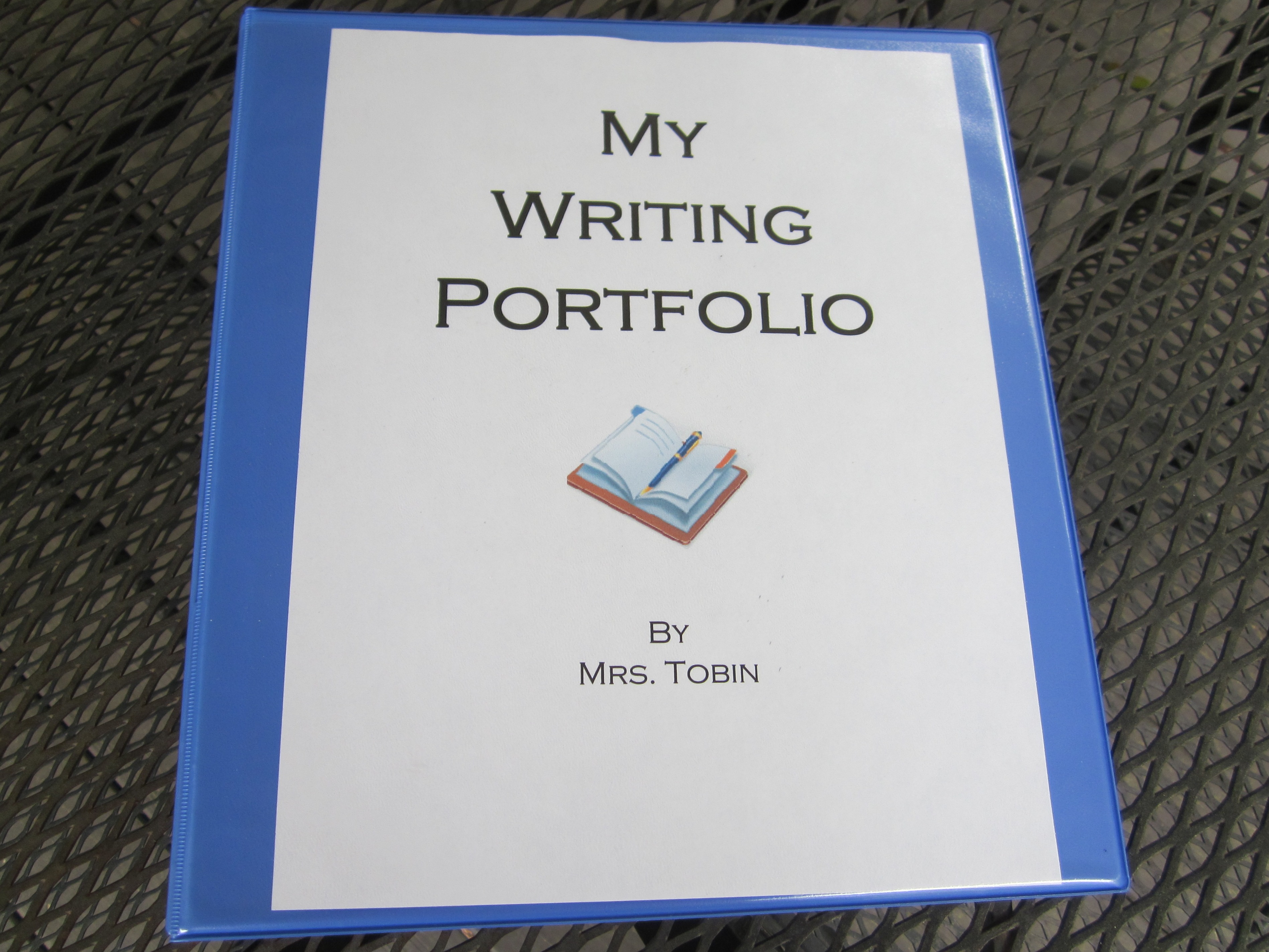
writing portfolio binder I love the end of the school year. And although summer vacation has been on my mind quite a bit, I am actually more excited about some of the culminating projects my students complete in May. Next week, we will begin our end of year Writing Portfolios.

 I plan for these portfolios all year. My students don't know this, but every time I assign a story or an essay, I have the Writing Portfolio in the back of my mind. It actually forces me to consider a variety of writing projects because I know I want a variety of writing samples in the portfolios. (This lends itself very well to Common Core!)

Every writing assignment I grade throughout the year, I send home for parents and students to review, but I require that students return the graded papers to me. I file all of the graded papers in my file cabinet. When we begin work on the Writing Portfolios, I return all of the writing. The students prepare new, clean copies of their favorite writing samples without any teacher marks on them. The students provide a 3-ring binder and organize all of the writing in the binder. I encourage them to add color or decoration like a scrapbook, so it is a fun keepsake.

The finished portfolios are a great record of a student's writing accomplishments from the school year. Parents love the Writing Portfolio because it is a time capsule of work completed, and it is organized before it goes home. I like the Writing Portfolio because it does not require hours of grading at the end of the year since I have already graded the writing samples at the time the students wrote the original version. I do grade for completion and organization.

portfolio requirements
Below is a list of suggested writing assignments you could incorporate into a Writing Portfolio. I try to offer some choice, so students can select their favorite pieces from the year while insuring variety at the same time. It is easy to adapt to any classroom based on your writing activities. Over the years, I have completed this assignment with 4th, 6th, and 9th graders. It always turns out well, and I am always pleasantly surprised at the growth in writing when I see writing samples from August alongside writing from April.

letter to myself
Letters to Self (2 letters in the portfolio)
  • The Writing Portfolio project actually starts in August during the first week of school. Students write a letter to themselves about their expectations for the upcoming school year. We complete a friendly letter mini lesson, and the students write the letter in their best handwriting. I do not read these letters. They are sealed in an envelope and stored until the end of the year. Next week, students will complete another letter describing what they actually accomplished during the year and their best memories. At this point, I return the first letter and both letters go into the Writing Portfolio.
Journals or Free Writes
  • My students respond to a journal prompt each day as a warm up activity. For the portfolio, students choose 10 of their favorite journals from the year, type or write them in final draft form, and add them to the portfolio.
  • Any quick write activities you have in your class from the year can be incorporated.
expository sample
 
Expository Writing
  • Compare/contrast main characters in a novel
  • Essays that discuss how a main character changes throughout a novel
  • Analyzing a big theme in a novel
  • Research essay
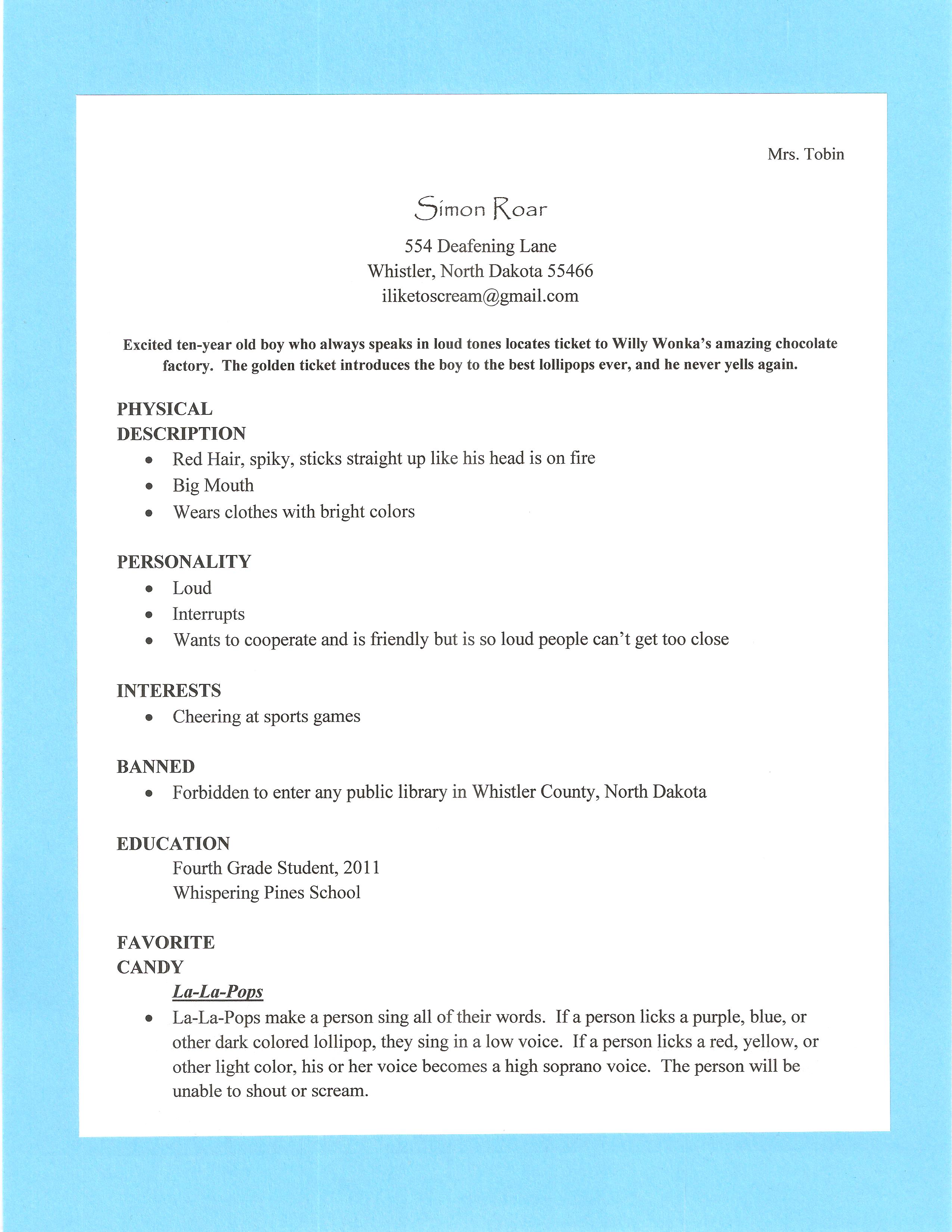
character resume portfolio
 
Creative Writing
  • Book cover for a novel study
  • Design a Facebook page for a book character
  • Write a resume for a character
  • Compose an epilogue for a book
  • Original student poems
  • Historical fiction short story (the story must be set in a time they studied in history during the school year)
  • Tall tale
  • Point of view journals (re-tell chapters in a book from the point of view of a character)
  • Create a Glog (virtual poster)
  • Newspaper with a feature store about the climax of a novel study
character newspaper portfolio

Odds and Ends
  • A list of favorite books from the year
  • An end of year survey about the class
  • Letters from book authors (click for details)
portfolio samples
Do you have strategies for showing student growth throughout the year? This is a great way to highlight changes in writing, but I would love a concrete way to share reading and math improvement that is easily visible to the student and parent. The Student Writing Portfolio plans and reproducibles are posted at my Teachers Pay Teacher Store. Please visit and download for free! You can also find me at:
  • TheRoomMom Blog
  • TheRoomMom on Pinterest
  • TheRoomMom on Facebook
Happy Writing and Happy End of the Year! Caitlin (TheRoomMom)
TheRoomMom
Read More
Posted in end of the school year, parents, school projects, teachers, teaching, TheRoomMom, writing, writing portfolios, writing projects | No comments

Tuesday, 23 April 2013

Writing That POPS!

Posted on 22:30 by the great khali
I love when writing is just plain FUN for my students. Sure, we go over all of the basics and "how to's" for writing. We learn how to organize essays, write thesis statements, use persuasive techniques, etc. Sometimes, though, it's just good to use our imaginations and have fun! This is when my writing classroom comes alive with some of my students' best ideas. This is the writing they want to share with their classmates.This is what they love. 

The end of the year seems to lend itself well to just having fun with writing. The pressure of state testing is over, and let's face it- we need writing activities that POP to engage students whose minds are already way ahead on summer vacation.

One of my favorite websites for fun writing ideas is Scholastic. If you haven't been to their Story Starters page yet, you have to give it a try! My students love the look and sound effects. It also can spark some pretty creative writing with very unique topics! 
My students have writing journals, and they really enjoy them. Sometimes I incorporate manipulatives with our writing topics to add a little spark. For example, when we do our Magic Stone writing, each student actually receives a magic stone before his/her writing takes place. The actual writing seems much more fun (and MAGICAL!) that way.
Sometimes students must do something silly before they start writing. When we do our Time Machine writing, students must stand and spin around three times to activate their time machines. When we do our Lost Alien writing (see below), students must speak in a "foreign tongue" before writing!
Putting writing prompts in a fun container (even if it's just a bag with a colorful label) can make the whole activity seem more enticing. Sometimes I photocopy the prompts on colorful paper that fits the theme. One of my favorite containers is a popcorn box I purchased a few years back (I think it was at Target, but I honestly can't recall).The prompts seem much more fun when they are chosen from such a container!
Popcorn theme prompts are even better when a movie theater sign is hung on the board and students begin writing to the sound (CLAP!) of the director's board. Sometimes a bit of popcorn delivered to each table during the process is an added bonus!
If you'd like to check out the popcorn prompts in my TpT shop, just click HERE.
I want my students to LOVE writing. Sometimes that means forgetting all the formalities and technicalities and just having fun with it...and I am VERY okay with that!

Until next time, happy teaching, friends!
Find me here:

The Peanut Gallery Blog
The Peanut Gallery TpT Shop
The Peanut Gallery on Pinterest


Read More
Posted in creative writing, The Peanut Gallery, writing | No comments
Older Posts Home
Subscribe to: Posts (Atom)

Popular Posts

  • Dream House: An Additive Area Project (3rd Grade Common Core)
    The 3rd grade Common Core standards are pushing us to reach a deeper understanding of many topics. For example, area is covered in much more...
  • Guest Post, Beyond Traditional Math: Common Core Math Can Be Rigorous AND Fun
    It is true, there ARE Common Core activities that are actually fun. In this stressful time of accountability and standardized testing, it is...
  • Teachers Helping Teachers--and Animals?
    I know what you are thinking . . . she's crazy.  Or, perhaps, you are thinking--at this time of year, my students are "animal enoug...
  • 5 Ways to Use a Hundreds Chart in the Upper Grades
    Hi there, upper elementary teachers! It's Blair from One Lesson at a Time , here to bring you some tips for using hundreds charts in the...
  • Language Arts...Fitting It All In!
    Greetings Friends! Mr. Hughes here of Created by MrHughes . I love my monthly slot here on ATUE! It is fun to share with you and learn from...
  • Motivational Quotes for State Testing {Free Posters!}
    Hi friends! It's Blair, from One Lesson at a Time . Well, it's about that time again. You know what time. Testing time. Everybody...
  • Perimeter Problems and Area Art!
    As you may have figured out, math is a true passion of mine as is finding ways to push students' thinking about math (and other things!)...
  • Easy Decimal Game: This Means War!
    Right before our February vacation, my fourth graders started decimals.  To start out, I always find it's easiest to equate decimals wit...
  • Angles, Angles Everywhere!
    Good morning! As many of you know I am a lover of anything and everything to do with an Interactive Notebook (INB) . I am here today to shar...
  • Creating Classroom Rules
    Every year I start out by talking to my fourth graders about rules.   But by fourth grade, they already know, on pa per, what classroom rule...

Categories

  • #ATUE
  • 100s Day
  • 2 Brainy Apples
  • 2 Fulbright Hugs
  • 2brainyapples
  • 2peasandadog
  • 3.nbt.1
  • 3.nf.1
  • 4.nf.1
  • 4mulaFun
  • 4th grade
  • 4th grade math
  • 5th grade
  • 5th grade math
  • 5th grade Reading Review
  • 6th grade
  • A Cat Named Haiku
  • Abstract Nouns
  • activity
  • Address Labels
  • adverbs
  • Air Fronts
  • Alexander rich last sunday
  • algebra
  • All Things Upper Elementary
  • Amber Thomas
  • Amber Thomas's Classroom Favorites
  • Amy Alvis
  • Amy Satterfield
  • and Share
  • Andrea M. Bentley
  • anglegs
  • angles
  • ANSWER method
  • AppleSlices
  • April Poetry Month
  • area
  • Artistry of Education
  • Aspire to Inspire
  • assessment
  • attributes
  • atue
  • ATUE takes on!
  • Augmented Reality
  • authentic performance tasks
  • back to school
  • Back to School Bargains
  • Back to School to do List
  • backward timing
  • Bar Modeling
  • Bar Models
  • behavior
  • Behavior Chart Template
  • Beyond Traditional Math
  • bingo
  • biographies
  • Blair Turner
  • Blockhead the story of Fibonaccie
  • Book Bloggin' Buddies
  • book blogging buddies
  • Book Clubs
  • Book Creator
  • Book Share
  • book talks
  • book trailers
  • books
  • boring
  • bucket filler
  • bucket fillers
  • bullying
  • bundle
  • caricature
  • CCS Math
  • CCSS
  • CCSS Math
  • Chapter 3
  • character traits
  • cheap present
  • Cheat Sheet Ring
  • christmas
  • circuits
  • class dojo
  • Class Themes
  • classdojo
  • Classifying Animals
  • classroom community
  • Classroom Decor
  • Classroom Game Nook
  • classroom library
  • classroom management
  • classroom organization
  • Classroom Stationery
  • Classroom Teacher Report Sheet
  • Classroom Twitter Board
  • clickers
  • close reading
  • Close Reads
  • Cloud Types
  • Co-teaching
  • Collaboration
  • collaboration cuties
  • colonies
  • Coloring Page
  • comics
  • commercials
  • Common Core
  • Common Core and So Much More
  • common core writing
  • communication
  • Competition
  • Comprehension
  • computers
  • concept mapping
  • Concrete Nouns
  • conferences
  • connect writing to reading
  • connection to math
  • constructed response
  • Constructed Response Assessments
  • cooperation
  • cooperative learning
  • Corrina Allen
  • Crafting Connections
  • Craftivity
  • Create
  • Created by MrHughes
  • Creating Classroom Rules
  • creative writing
  • creativity
  • cross-curricular
  • cross-curriculum
  • cue cards
  • cute valentines
  • Daily Dose
  • Data collection
  • Deb
  • decimal form of fractions
  • Decimal Numbers
  • decimals
  • deck of cards
  • dialogue
  • dice
  • dictionary skills
  • differentiation
  • Dinosaur Deals
  • discovering activity
  • division
  • DocsTeach
  • download
  • Earth
  • Earth Day
  • easter
  • easy
  • eBooks
  • Eclectic Educating
  • Edmodo
  • educational technology
  • educents
  • Educreations
  • ELA
  • electricity
  • elementary math
  • Elizabeth Stavis
  • emotions
  • end of the school year
  • engagement
  • engineering
  • English Language Arts
  • ESL
  • Estimating
  • Every Day Counts Math
  • every pupil response
  • Exit Slips
  • experiment
  • extended response
  • fact fluency
  • first days of school
  • five senses
  • flapjack
  • flashcards
  • flippable
  • Flipped Classrooms
  • foldable
  • Formative Assessment
  • Fourth Grade
  • Fourth Grade Studio
  • Fourth Grade Test Prep
  • fraction equivalents
  • Fraction of a set
  • fractions
  • free
  • Free for All
  • FREEBIE
  • freebies
  • Friday Free Writing
  • fun
  • Fun 4 All
  • Gabrielle Dixon
  • game
  • Games
  • GCF
  • Genius Hour
  • genre
  • geography
  • Giveaway
  • goal setting
  • Goals
  • grading versus noticing
  • Grading with Labels
  • grammar
  • GRASPS
  • greedy triangle
  • groups
  • Guest Contributor Form
  • guest post
  • Guest Poster badge
  • Guest Posters
  • Guided Reading
  • Haiku
  • hands-on
  • hands-on learning
  • Heather LeBlanc
  • Historian
  • holidays
  • How to Clean Your Desk
  • hundreds charts
  • Hunter's Teaching Tales
  • I Love My Classroom
  • idioms
  • IEP Cheat Sheet
  • If you hopped like a frog
  • INB
  • incentives
  • Independence day
  • inexpensive
  • informational texts
  • informational writing
  • integrating content
  • integration
  • Interactive Learning
  • Interactive Notebook
  • intro
  • Inverted Classrooms
  • iPad
  • iPad apps
  • iTeach 1:1
  • Jamie Riggs
  • Jennifer Findley
  • Jennifer Smith-Sloane
  • Joey Udovich
  • Journey Through the Text
  • Kate's Classroom Cafe
  • Katie Lately
  • Keith Geswein
  • Kelly Anne
  • Kimberlee Fulbright
  • kindness
  • Kristen Stull
  • Kristin Kennedy
  • Labels- Learn With Leah
  • Ladybug's Lounge
  • Language Arts
  • Last Day of School
  • LCM
  • leadership
  • Leah Fullenkamp
  • Leanne Baur
  • Leanne Baur's Creative Classroom
  • learning goals
  • learning styles
  • Lesson of a Story
  • Letters to Incoming Class
  • life science
  • line plots
  • linky
  • linky party
  • literacy
  • Literacy Center
  • literary devices
  • literature
  • literature circles
  • logic
  • Long Division
  • Looking From Third to Fourth
  • Love that Dog
  • lowest terms
  • making inferences
  • Maneuvering the Middle
  • manipulatives
  • Martin Luther King
  • Mary Bauer
  • matching
  • math
  • math and writing
  • math fact fluency
  • Math in Focus
  • math is real life
  • Math Learning Center Stations
  • math love
  • Math Manipulatives organization
  • Math MCAS Review
  • Math multistep word problems
  • Math Science Social Studies...Oh my
  • math valentines
  • math vocabulary
  • Math Workshop
  • MCAS
  • measure to the nearest quarter inch
  • measurement
  • media
  • Meg Anderson
  • Melissa Mazur
  • Melissa O'Bryan
  • Memories
  • mental health
  • mentor sentence
  • mentor text
  • Mentor Texts
  • mentoring
  • Messy Desks
  • Middle School Math Moments
  • MissMathDork
  • Mobile
  • MobyMax
  • MOOD
  • More Time 2 Teach
  • Morning Meeting
  • Morning Meeting Greeting
  • Motivation
  • Mr. Magician
  • MrHughes
  • Mrs. Thomas's Classroom Favorites
  • multiplication
  • music in the classroom
  • national archives
  • National Poetry Month
  • nerdy valentines
  • New Student Preparation
  • New Year's
  • notebooking
  • Noun Hunt
  • nouns
  • novel discussion groups
  • Number Lines
  • number of the week
  • observation
  • on-line learning tool
  • One Lesson at a Time
  • Open Response
  • opinion writing
  • Order Up!
  • organization
  • ornaments
  • parent's night
  • parents
  • partner work
  • Patriot Day
  • performance assessments
  • performance tasks
  • perimeter
  • perseverance
  • persuade
  • persuasive writing
  • pi
  • pi day
  • Pigs in the Pantry
  • pinterest
  • Plan B
  • Planner Labels
  • podcasting
  • Poetry
  • Poetry Elements
  • Poetry Unit
  • Point of View
  • positive
  • positive points
  • pre assessment
  • Precipitation
  • presents for your students
  • prime factorization
  • Printable Forms
  • Printable Packet
  • problem solving
  • professional development
  • Prose
  • punctuation
  • Puppet Pals
  • puzzles
  • Pythogoras and the rations
  • QR Code Labels
  • QR Codes
  • quadrilaterals
  • questioning
  • quotations
  • Rachael Parlett
  • RAFT writing tasks
  • read-aloud round-up
  • Reader's Theater
  • Reading
  • reading across the curriculum
  • reading across the curriculum G is for Google
  • reading resources
  • reading response
  • reading social studies integration
  • Reading Workshop
  • real world
  • real world application
  • RebeccaHallock
  • rebus
  • recording
  • Recruiting Guest Bloggers
  • rectangles
  • reference sources
  • Reflection
  • Regions
  • relays
  • remediation
  • research project
  • Response to Reading
  • Review Game
  • revision
  • Revision Tips
  • rhombus
  • Right Down the Middle
  • rigor
  • risk taking
  • rounding
  • roundup
  • Rubric Labels
  • ruler
  • Sale
  • salt dough
  • salt ornaments
  • save fred
  • school projects
  • science
  • science and writing
  • science labs
  • science notebooking
  • Science writing integration
  • Seating Charts
  • Secrets Revealed
  • Sentence Fragments
  • September 11th
  • SET
  • shearerlysadler4thgrade
  • Short Stories
  • Shut the Door and Teach
  • sight words
  • Sign Up Board
  • Singapore Math
  • snow removal
  • Social skills
  • social studies
  • social studies and writing
  • solar system
  • sorting
  • spaghetti and meatballs for all
  • Spain
  • Special Education
  • Spring Fever Sale
  • Square Numbers
  • squares
  • St. Patrick's Day
  • Standardized Testing
  • Standards for Mathematical Practice
  • standards-based
  • State Float Project
  • States
  • states and capitals
  • States and Regions Unit
  • STEM
  • storytelling
  • stressed
  • student engagement
  • student engagment
  • Student Materials Shelf
  • Student Organization
  • student portfolios
  • Students share news
  • study
  • Successful 50 Minute Classes
  • summer
  • summer learning
  • Summer Project Series
  • Summer Reads
  • Symmetry
  • synonyms
  • tabitha carro
  • take time to write
  • Tammi Booth
  • task cards
  • Teach
  • Teacher Appreciation Week
  • teachers
  • Teachers working together
  • TeachesThirdinGeorgia
  • teaching
  • Teaching Abroad
  • Teaching Books
  • teaching elementary math
  • Teaching Special Thinkers
  • Teaching To Inspire in 5th
  • team building
  • Team Planning Form
  • technology
  • TEFL
  • Ten Marks
  • test prep
  • testing
  • testing brain breaks
  • thank you
  • thankful
  • thanksgiving
  • the balanced classroom
  • The Brown Bag Teacher
  • The Peanut Gallery
  • The Teacher Studio
  • Theme
  • TheRoomMom
  • thesaurus
  • Timesavers
  • TPT
  • TpT Sale
  • Upcycling Craft Project
  • valentines
  • valentines day
  • Vertebrates
  • video
  • videos
  • Vista Print
  • vocabulary
  • Warm Ups
  • Water Cycle
  • Weather Unit
  • White Boards
  • Whole class game
  • Whst's your angle Pythagras
  • Wild About Fifth Grade
  • word problems
  • Word Search
  • Wordle
  • writers workshop
  • writing
  • writing connection
  • writing cycle
  • writing in the classroom
  • writing portfolios
  • writing projects
  • Writing Workshop
  • Yearn to Learn
  • YouTube

Blog Archive

  • ▼  2014 (62)
    • ▼  April (13)
      • Guest Post, Beyond Traditional Math: Common Core ...
      • Easy Fraction of a Set Game
      • Introducing Division Concepts
      • Testing Time is Upon Us!
      • Fun, Quick, and Easy Reading Comprehension Games f...
      • Guest Post: Kimberlee Fulbright, Close Reading J...
      • I Have... Who has.... {Freebie + Giveaway!}
      • Number Line Frustration? Walk the Walk!
      • Creating polygons in the classroom
      • Bringing Earth Day into the Classroom
      • Guest Post Lucy Ravitch: How Decimals and Fractio...
      • Test Incentives and Motivational Ideas
      • Guest Post from The Brown Bag Teacher: Augmented ...
    • ►  March (16)
    • ►  February (15)
    • ►  January (18)
  • ►  2013 (241)
    • ►  December (15)
    • ►  November (18)
    • ►  October (24)
    • ►  September (19)
    • ►  August (15)
    • ►  July (20)
    • ►  June (20)
    • ►  May (25)
    • ►  April (19)
    • ►  March (21)
    • ►  February (18)
    • ►  January (27)
Powered by Blogger.

About Me

the great khali
View my complete profile