amanda beth online

  • Subscribe to our RSS feed.
  • Twitter
  • StumbleUpon
  • Reddit
  • Facebook
  • Digg

Wednesday, 11 December 2013

Incorporating Math and Recipes into your Classroom for the Holiday!

Posted on 03:00 by the great khali
This is a reprint of one of my posts on my blog MissMathDork for our monthly Math Is Real Life lin-up.  The original post can be found here.

~*~*~*~*~*~*~*~*~*~*~*~*~*~*~*~*~*~*~*~*~*~*~*~*~*~

I had planned on writing this month's Math is Real Life on Thanksgiving dinner and how to prepare for serving large crowds of people.  Then I realized.... I ALWAYS make the same amount of Thanksgiving food - WAAAY TOOO MUCH!  I mean, you HAVE to have leftovers right?!  So.... instead I want to tell you all about using a fun recipe in the classroom!  Yep... a RECIPE in the CLASSROOM!  


Last year I made salt ornaments for each of my students.   You can find the posts where I wrote about this fun activity HERE and HERE.  This year I decided to step this activity up a notch - partly because it made a huge mess in my kitchen, partly because I didn't have time to create 50 ornaments on my own, and partly because I've always wanted to "cook" in my classroom with my kiddos.

Call me crazy, believe me you wouldn't be the first, but on a Tuesday night, I started packing up the items we would need.  A large bowl, a water pitcher, wax paper, cookie cutters, measuring cups, salt, flour, a rolling pin and baggies.

On Wednesday during class, I laid each of the items out on the table and handed out the Ornament Math recipe sheet.  You can download it for free by clicking on the link HERE.  If you look close at the recipe you see that I wrote it was 1/2 c. flour, 1/4 c. salt and 1/4 c. water.  The recipe I have always used is 2c. flour, 1 c. salt and 1 c. water.  That just seemed a wee bit TOO easy to give them though!  In reality, you just need to have 2 parts flour to 1 part salt and 1 part water.  My 2c/1c/1c ratio is just about the perfect size to make without the batch getting out of control, or too hard to handle, or too dry.

First we decided how many ornaments each student wanted to make.  I gave them the option to make up to three (when the day came, they ended up getting to use up all their dough which usually meant 4, possibly 5 ornaments). 

Finally, after a day of "math-ing" out our plan, the DOUGH DAY arrived!  I was so incredibly excited to go to school this day  - I just knew we were going to have a blast!  As you can see, I covered all the tables in purple bulletin board paper (purple seemed like a great color to be able to see the flour so we wouldn't spill it and contrast the dough when I took pics)
Above, you can see the mixing area.  You may notice that I only had one bowl - that was purposeful.  I wanted to be with them as they were mixing up their concoction so that we weren't adding to much water or other ingredients..... papier mache glue anyone?

Below was the rolling area. 

And... because we really didn't need our gunky hand prints all over the school.... one of the custodians gave me a 5 gallon bucket to put warm water in for a clean up station.

Okay.... so back to the recipe.  All the kiddo wanted to have turns making batches, so instead of making a giant batch, we made lots of tiny batches so everyone could get their hands in!

First we measured.

Then we mixed....

And got a bit messy...

But the mess soon turned into nice balls of dough!

Then we rolled out put the dough.  It was hysterical that none of them knew how to do this.  We spent lots of time talking about adding flour and how to keep the dough moving.... flip and turn, flip and turn....

BUT soon, they got the hang of it!

...and started to form their ornaments.

We put each ornament on a small piece of wax paper with their name on it. 

The ornaments quickly took over the room!

Thankfully... cleanup was a breeze!  Glad we thought to cover the tables over beforehand!

After a loooooong weekend of banking (pretty sure my stove worked over 16 hours a day for 2 days plus a few spare hours throughout the week!) I repacked all of the ornaments in a baggy for each kiddo (since they had laid claim to their own with the wax paper) and then sorted them by class to make it a wee bit easier to hand them out the next day.

Then the decorating fun began!

Kiddos used sharpies and pipe cleaners to make their ornaments colorful and fun!
They had to be very careful with some of the thinner ornaments so they didn't break.  Also, dropping these ornaments is a bad idea!  In the next few pictures you can enjoy some of their designs.


This project was an absolute blast!  I was surprised by how many kiddos had never measured out ingredients.  We ended up having some pretty cool conversations about how to dry measure.  We also chatted about how to add water slowly because you can always add more, but you can't take it back out.  I can't imagine ever doing this project any other way.... Now I'm excited for doing this again next year... maybe in 2nd semester we'll make food to eat... they requested pizza..... hmmmm?!

~*~*~*~*~*~*~*~*~*~*~*~*~*~*~*~*~*~*~*~*~*~*~*~*~*~

Math IS Real Life is a monthly link up hosted by 4 ATUE collaborators.
On the 1st Wednesday of each month we write about how we have used math in OUR real lives.  We include pictures that you can easily share in your classroom, as well as possible freebies, and activity ideas!  

Interested in more Math Is Real Life posts?  Check out our Pinterest board!
Interested in linking up? Join us again on January 1st. 2014 for the next edition!


Want to stay in contact with me?  Here are some awesome options:
MMD on Facebook
TPT Store
Blog
Pinterest
MMD requests

Read More
Posted in cheap present, christmas, easy, inexpensive, Jamie Riggs, math is real life, MissMathDork, ornaments, presents for your students, salt dough, salt ornaments | No comments

Tuesday, 10 December 2013

Quality Counts Board

Posted on 01:00 by the great khali
It's about this time of year that students get antsy and don't always put forth their personal best.
I find myself saying over and over, "Is this your best work?" or "Did you rush?"
So, this week I'm bringing out my trusty Quality Counts Board.
I ordered a large size car magnet from Vista Print a few years ago titled "Quality Work". When needed, I simply display it on my white board. Then every so often I will pick a few model work samples to hang underneath it.
The work I pick has to show quality effort. If I pick a student's work he then gets to write with a special pen until I replace their work with someone else's. It works like a charm and saves some of my teacher sanity as the "holiday-itis" sets in.


~Denise


Find me at:

My blog

My TPT store

Pinterest


Read More
Posted in classroom management, Yearn to Learn | No comments

Monday, 9 December 2013

It's a Holiday Freebie Festival with ATUE!

Posted on 03:00 by the great khali

If you are anything like me, you appreciate a good old fashioned FREEBIE. Well, folks, we got tons of 'em for you here today! Without further ado, I bring to you ATUE's Holiday Freebie Festival! Just click on each cover to access it for FREE on TpT!

Holiday Coupon Books from Blair Turner:

Benchmark Fraction Sort from Jennifer Findley:

Twas The Night Before Christmas - I Have, Who Has from Mr. Hughes:

Parts of Speech Silly Sentences Game from Deb Hanson:

Redesigning the North Pole from 2 Brainy Apples:

Christmas Conjunctions from Jen Bengel:

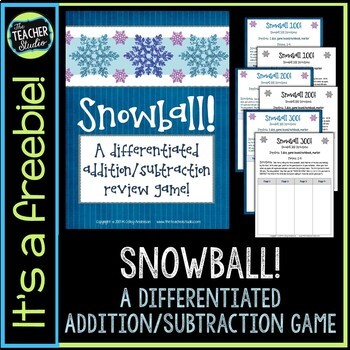
Snowball! A Differentiated Addition and Subtraction Game from The Teacher Studio:

Linear Equation Gift-Tag Match-Up from Miss Math Dork:

Dashing Through Equations from 4MulaFun:

Reindeer Run-Ons from Right Down the Middle With Andrea:

Holiday Aid for Low Income Students from Amber Thomas:

Rudolph's Christmas Writing Freebie from Yearn to Learn:

Retell, Relate, Reflect, Review Complete Assessment Package from 2 Peas and a Dog:

Still not enough to satisfy your freebie fix?!? Alrighty then. There's more where those came from. The Winter Holiday Tips and Freebies E-Books are published, and they are pretty fan-freaking-tastic. Each one has 50 pages of tips and links to TpT freebies. No matter WHAT you teach, you are sure to find something great to use in your classroom over the coming months.  We all hope that you enjoyed the big Cyber Monday sale and that you found some great new products to help you make your life easier!

Remember, your bloggers/resource creators spend HOURS on their products--even freebies--so be sure to take some time to leave some feedback on the freebies you use and love!

Enjoy!


Hope you enjoy the goodies--and watch for lots of great posts coming up over the next weeks!

Read More
Posted in | No comments

Sunday, 1 December 2013

Teaching perseverance--through "learning posters"!

Posted on 21:00 by the great khali
If any of you follow my blog regularly, you know that I love to push my students in math.  I like to help not only improve their math skills but also their attitudes about math.  Sometimes I think it's hard for people to believe that the way to do this is not to make things easier--but to coach kids through challenges!  If you are interested in reading my first blog post about perseverance, click here.
This is one of my "Kid Friendly" Standards for Mathematical Practice posters... click it to see more!
Today I want to briefly talk about how using "learning posters" in the classroom can contribute to students' engagement and can work to improve perseverance.  Although it seems like a simple concept, I have found this to be one of the most powerful tools I have in my back pocket to improve student effort, willingness to persevere, cooperation, and eventually presentation skills!

A learning poster is simply a large sheet of construction paper that we use to record something "noteworthy" that happens in our learning--a tricky problem solved in a unique way, a solution to something that no one else has found, a cool "discovery" that happened in science class, a really creative lead or conclusion to a piece of writing--anything that might be worth sharing with the class.

These unfold in one of two ways in my classroom--either I initiate it with something like, "You know, Kevin, if you keep pushing and finish this problem, it might be worth making a learning poster to share with the class."  

or

"Becca and Kim--it looks like you took a totally new approach to that problem.  When you finish, would you put it on a learning poster to share?"

Here is an example of a learning poster where a student tried "guessing and checking" to solve a problem and got it!  He was super organized about how he kept track of his work in his notebook, so I asked if he would be willing to make a learning poster to show the rest of the class what he did.


But what is even MORE fun is when the students themselves ask if they can make a learning poster!  When they feel they have done something interesting or unique or helpful, they can grab a piece of paper and make one to share.  We did have some discussions about not EVERYTHING is learning poster worthy!  We reserve them for interesting solutions...for creative thinking...for super high quality work/organization...for examples of perseverance.  The students do a pretty nice job of self-monitoring.

Here's an example of a student-created learning poster to show what his group did in science when they were really stuck making their circuit light.  They were frustrated at first, and then worked through it and wanted to tell everyone what they did!


Here's what's key.  These are NOT meant to be masterpieces.  They have already done the work, so the last thing I want them to do is spend MORE time making a detailed poster.  They are not meant to be a fancy display--they are meant to help them present to the class.  Sometimes I just throw student work under the document camera...but this allows them to take their initial work, streamline it, organize it if necessary, and "tidy it up" a little.  It ALSO can be more permanent.  I leave posters like this up for several days so we can refer back to them if needed.

So...give it a try!  I am pretty passionate about the concept of perseverance and the impact it can have on student learning.  I have been mulling over for months how to share some of the things I do, and this is one of them!  If you are interested in learning more, I did put a ton of my ideas together along with a set of 24 CHALLENGING problems to be used to help teach perseverance in the math class.  I'm pretty excited about it and I think it can be a real game changer for many students!  If you are interested, check it out!

A part of this resource is that I took all the problems and made enlarged versions to use as "learning poster headers".  You can see that in the math learning poster photo in this post.  Saves time!
Don't forget it's the big TpT Cyber Monday sale today and tomorrow!  Make sure to use your "CYBER" code at the check out to get your additional discounts!  Have a wonderful week--and happy shopping!


www.theteacherstudio.com
http://www.teacherspayteachers.com/Store/Meg-Anderson
http://pinterest.com/dmamec/
http://www.facebook.com/pages/Fourth-Grade-Studio/154102318070432
or find me on Twitter at @FourthGrStudio 
or Instagram @Fourthgradestudio


Read More
Posted in Meg Anderson, perseverance, problem solving, The Teacher Studio | No comments

Friday, 29 November 2013

Guest Post: Collaboration Cuties, How to Use Mentor Texts

Posted on 03:00 by the great khali
Hey there!!  This is Amanda from Collaboration Cuties and I am so excited to be guest blogging here today!!

Today, I wanted to share with you how we use mentor texts in our classroom!  If you follow our blog at all, you know that we loooooove mentor texts!  We have a linky each week devoted to it!  If you haven't stopped by to see all of the amazing texts linked up, start HERE  (after reading this post!) to check out what we've been up to!!  Be warned!!!  I had to switch to an Amazon Prime account after we started this linky because there were so many great texts linked up that I HAD TO HAVE RIGHT THEN!  ;O)

Okay, so on with using mentor texts...I  know that a lot of upper elementary teachers are departmentalized, so it may be that this particular book isn't something you might use, but you will get the general feel for how you could use any mentor text, no matter the subject area you teach in!

The book I want to tell you about is called Roanoke, The Lost Colony by Jane Yolen.  Jane Yolen is definitely one of my favorite authors because she is amazing at writing historical fiction!


We are just getting started with our unit in Social Studies on the Thirteen Colonies, and I am launching it with this book.  Here is the description from Amazon:

In 1587 John White was chosen by Sir Walter Raleigh to lead a new colony at Roanoke off the Atlantic coast. After bringing many men, women, and children to the new land, White went back to England to gather supplies for the long winter. But when he finally returned to the fort almost three years later, he found that all of the colonists had vanished. The only signs of life left were the letters CRO carved into a tree and the word CROATOAN carved into one of the fort's posts. Some people think that the Spanish army captured the colonists; some people think that the local native people murdered them; others think that the colonists went off to live with the native people and start a new life. Still others think that the colonists tried to sail home to England and were lost at sea. No one knows for sure. 

When I use the term mentor text, I am talking about a text that will be used for more than one reading or lesson.  Usually, if I truly wanted to use a book as a mentor text, I try to use it over a week long period.

In planning to use this book, here are the lessons I would use with it.  Since each of us has different amounts of time for our language arts block or social studies block (or whichever subject you teach), I will just number the lessons since we would all have to do it at our own pace that works within our classroom.  :O)

Lesson 1
First off, I would read the book in social studies.  I am using this as a launch for the unit, so I want to make that social studies connection.  I would not read the vocabulary yet...that comes in lesson 2.

While reading the book, I would have my students fill out a FQR chart.  I could type out one for them, but since we use interactive notebooks, I would have them complete this in their journals.


The purpose of a FQR chart is to engage students with the text and get them thinking and questioning what they are reading (or hearing read).  They write down facts in the left column, questions they have about the fact in the middle, and if they find a response in the text, they can fill in the response column, or, they may have to make an inference.  Here is an example we might write while we are reading the text.


Now, this text has some great features to it.
From Roanoke, The Lost Colony
Each set of pages has a "sticky note" with vocabulary words on it from the passage.  It also has facts on the spiral bound page (like the one on the left) that gives even more information.

So...

Lesson 2
Vocabulary-  There is a lot of great vocabulary highlighted in this book (and she put it on sticky notes, which I love about her!).  So, I would read the book again, but focus on the vocabulary words.  We would complete a vocabulary chart in our reading notebooks using these words.  

We've used a chart as simple as this (yes, I know it's not very cute...)   ;O)
Or, one like this, which you can get in our TpT store for free by clicking on the picture.

Depending on which organizer I used, I may have them inference what the word means, or I may just read the sentence it is in and have them use context clues BEFORE reading the definition on the sticky notes to check their thinking.  I would also take the time to point out how Jane Yolen inserted the definitions cleverly throughout instead of at the end in a glossary.

Lesson 3
We are working on informational writing right now and I would ask students to go back into their rough draft, and decide how they want to highlight key vocabulary.  Some may have already highlighted them, while others may be making a glossary.  Now, they have another option to try in their own writing!

Lesson 4
Close reading- Here, we would do a close reading of this page in the text.  This is the first page.  I would photocopy this (since one page is allowed to be copied from the book) and we would paste it into our journals.


First off, there is quite a bit of vocabulary here that is not defined in the book.  We would discuss this.  Then, we would discuss cause and effect, highlighting causes in one color and the effects in a different color.  


Some of the sentences state events that could be a cause and an effect.  We would write those in our journals as both, showing their relationships.  For example, the passage says that the native people were infected with European diseases.  Well, the colonists coming to their land caused this.  But, since they were infected with the diseases, the effect (that isn't stated) is that many of the native people died.  We would add this in our reading journals.

There are several pages in this text that could be used for this skill.  A few pages after this first page, there is another passage with less information.  This would be a great passage to use to differentiate in small groups with a lower reading group.

Lesson 5
Writing-  I would have them write in their writing journals about what they think happened at Roanoke and to use evidence from the text, and what we had been learning, to support their thinking.  At the end of the book, there are theories that Jane Yolen shares about what may have happened.  Also, with writing, I would have them write about whether they think John White made a good decision to bring colonists with them and then to leave them, using evidence to back up their thinking.  

There is also a timeline, so this is a great text feature to share with students.  They can easily make a timeline as we start our colonies unit and continually add to it as we go along in social studies!

Other Activities:

We use mentor sentences in our classroom to teach grammar within writing.  If I were to choose a sentence from this book (which was really hard!) I'd choose this sentence:
On August 18, White's daughter Eleanor gave birth to Virginia Dare, the first English child born in America.
I would choose this sentence to work on the following grammar skills:  capitalization, dates, possessive noun, commas.
(For more about how we use mentor sentences, you can go to our post HERE.)

Fact and opinion- Students could discuss facts and opinions with this text (what did Jane Yolen include that were facts and what may have been her opinions) or have them create their own fact and opinion game using facts from the story.  On cards, they could write facts and then their own opinions and have classmates play the game, sorting by facts and opinions.

There are really so many things that you can do with just one book...I could go on and on...but I won't because I don't want to overwhelm you!!  :O)  This is just a topic that I LOVE!!

Hopefully you found something in this post that you could use! If you have any questions, please let us know!  Thank you so much to All Things Upper Elementary for hosting us!

Stop by and see us sometime!!
Amanda

Find us at our BLOG
Find us on FACEBOOK
Find us on INSTAGRAM
Read More
Posted in close reading, collaboration cuties, colonies, integration, Language Arts, mentor sentence, mentor text, Reading, social studies, writing | No comments

Thursday, 28 November 2013

We Are Thankful!

Posted on 03:00 by the great khali
Here at All Things Upper Elementary, we are so very THANKFUL for all of our loyal readers who have become our friends. Today on this day of Thanksgiving (in the US) we want to take the time to share what we are thankful for with you. 


Check out our posts on each of our blogs as we share the many things that we are thankful for this year. If you feel like posting as well, leave your blog link in the comments so that we can check you out as well.


Read More
Posted in #ATUE, 4mulaFun, Jennifer Smith-Sloane, linky party, thankful | No comments

Wednesday, 27 November 2013

Practicing Long Division with Money

Posted on 03:00 by the great khali
Do you find that the topics that you struggled with the most in school are the ones that you love teaching the most?  That's how I feel about math, and in fourth grade the math topic I remember struggling with the MOST was long division.

I remember when I was a kid, it would take me FOREVER to solve a page of 10 long division problems.  I was one of the last ones done, sitting off to the side to finish up.  I'd stare blankly at 658 divided by 7 and try multiplying every number by 7 in the attempt to get 65.  I felt so frustrated that I had to do all those "extra" math problems and hope that they were right too.

So when it comes time every year to teach my students long division, I've tried lots of ways.  I had them make their own mnemonic devices to remember the steps (similar to the Do My Scissors Cut Bricks type acronym for Divide, Multiply, Subtract, Check, Bring Down).  I've tried partial quotient.  But for me it always comes back to practicing the physical process of dividing.  Base ten blocks are a great way to do it, but my favorite manipulative when it comes to math is money.  There's just something about counting money that makes people happy! 

Last week I described how I introduce the concept of dividing hundred dollar bills, ten dollar bills, and one dollar bills into "wallets" over on Shut the Door and Teach.  This activity helps get the kids used to the manipulatives involved and has a high success rate; with numbers that are carefully chosen to be evenly divisable (such as 486 divided by 2) the kids are able to compute in their heads before long.  So to up the ante the next day, I give the kids numbers that are not as simple to divide.

In the example on the right, you can see that the child knew he couldn't divide a hundred dollar bill 4 ways, so he had to regroup it for ten tens.  He was then able to put 2 ten dollar bills in each wallet, and he had 2 ten dollar bills left as a remainder. 

Of course this does not complete the problem, however he is learning that 20 is a reasonable answer to 100 divided by 4, which is pretty powerful!  I'm much happier with him knowing this than memorizing DMSCB and not understanding what numbers to compute at each step. 


The child on the left is working on the same problem.  She also knows that the answer to 100 divided by 4 will be about $20.  However she is continuing the regrouping process.  She is trading in those 2 ten dollar bills for one dollar bills.  Although she has written a bunch of zeroes in the ones place on her place value mat, she will soon be able to refine her answer to include the ones place.


This child has completed the process of dividing 100 by 4.  She is also able to accurately record the steps she has taken to arrive at an answer.  She regrouped the one hundred to become ten tens (although she forgot to erase the hundred).  She also knew she could tally up the 4 twos in the tens place when writing out the long division algorithm.  She used the difference (10 - 8 = 2) to find how many tens to regroup into ones, and she divided the twenty ones by 4 to get 5.  Although it's difficult to read her paper, she transferred the process she used with the manipulatives to the traditional long division algorithm. 

If you need more examples of numbers that increase in difficulty when it comes to long division, I have 3 different levels of long division task cards with numbers similar to these two examples available as a bundle (they will be 28% off on Cyber Monday and Tuesday, 12/2 and 12/3 with promo code CYBER).  I use the cards as review throughout the year because long division is one of those concepts that kids need to see many times before they can master it.  I never feel guilty leaving these in my sub plans because the kids know what to do and actually enjoy long division when they get to use the money. 


Read More
Posted in Amber Thomas, Amber Thomas's Classroom Favorites, Long Division, math | No comments
Newer Posts Older Posts Home
Subscribe to: Posts (Atom)

Popular Posts

  • Dream House: An Additive Area Project (3rd Grade Common Core)
    The 3rd grade Common Core standards are pushing us to reach a deeper understanding of many topics. For example, area is covered in much more...
  • Guest Post, Beyond Traditional Math: Common Core Math Can Be Rigorous AND Fun
    It is true, there ARE Common Core activities that are actually fun. In this stressful time of accountability and standardized testing, it is...
  • Language Arts...Fitting It All In!
    Greetings Friends! Mr. Hughes here of Created by MrHughes . I love my monthly slot here on ATUE! It is fun to share with you and learn from...
  • Teachers Helping Teachers--and Animals?
    I know what you are thinking . . . she's crazy.  Or, perhaps, you are thinking--at this time of year, my students are "animal enoug...
  • 5 Ways to Use a Hundreds Chart in the Upper Grades
    Hi there, upper elementary teachers! It's Blair from One Lesson at a Time , here to bring you some tips for using hundreds charts in the...
  • Motivational Quotes for State Testing {Free Posters!}
    Hi friends! It's Blair, from One Lesson at a Time . Well, it's about that time again. You know what time. Testing time. Everybody...
  • Creating Classroom Rules
    Every year I start out by talking to my fourth graders about rules.   But by fourth grade, they already know, on pa per, what classroom rule...
  • Perimeter Problems and Area Art!
    As you may have figured out, math is a true passion of mine as is finding ways to push students' thinking about math (and other things!)...
  • Angles, Angles Everywhere!
    Good morning! As many of you know I am a lover of anything and everything to do with an Interactive Notebook (INB) . I am here today to shar...
  • Easy Decimal Game: This Means War!
    Right before our February vacation, my fourth graders started decimals.  To start out, I always find it's easiest to equate decimals wit...

Categories

  • #ATUE
  • 100s Day
  • 2 Brainy Apples
  • 2 Fulbright Hugs
  • 2brainyapples
  • 2peasandadog
  • 3.nbt.1
  • 3.nf.1
  • 4.nf.1
  • 4mulaFun
  • 4th grade
  • 4th grade math
  • 5th grade
  • 5th grade math
  • 5th grade Reading Review
  • 6th grade
  • A Cat Named Haiku
  • Abstract Nouns
  • activity
  • Address Labels
  • adverbs
  • Air Fronts
  • Alexander rich last sunday
  • algebra
  • All Things Upper Elementary
  • Amber Thomas
  • Amber Thomas's Classroom Favorites
  • Amy Alvis
  • Amy Satterfield
  • and Share
  • Andrea M. Bentley
  • anglegs
  • angles
  • ANSWER method
  • AppleSlices
  • April Poetry Month
  • area
  • Artistry of Education
  • Aspire to Inspire
  • assessment
  • attributes
  • atue
  • ATUE takes on!
  • Augmented Reality
  • authentic performance tasks
  • back to school
  • Back to School Bargains
  • Back to School to do List
  • backward timing
  • Bar Modeling
  • Bar Models
  • behavior
  • Behavior Chart Template
  • Beyond Traditional Math
  • bingo
  • biographies
  • Blair Turner
  • Blockhead the story of Fibonaccie
  • Book Bloggin' Buddies
  • book blogging buddies
  • Book Clubs
  • Book Creator
  • Book Share
  • book talks
  • book trailers
  • books
  • boring
  • bucket filler
  • bucket fillers
  • bullying
  • bundle
  • caricature
  • CCS Math
  • CCSS
  • CCSS Math
  • Chapter 3
  • character traits
  • cheap present
  • Cheat Sheet Ring
  • christmas
  • circuits
  • class dojo
  • Class Themes
  • classdojo
  • Classifying Animals
  • classroom community
  • Classroom Decor
  • Classroom Game Nook
  • classroom library
  • classroom management
  • classroom organization
  • Classroom Stationery
  • Classroom Teacher Report Sheet
  • Classroom Twitter Board
  • clickers
  • close reading
  • Close Reads
  • Cloud Types
  • Co-teaching
  • Collaboration
  • collaboration cuties
  • colonies
  • Coloring Page
  • comics
  • commercials
  • Common Core
  • Common Core and So Much More
  • common core writing
  • communication
  • Competition
  • Comprehension
  • computers
  • concept mapping
  • Concrete Nouns
  • conferences
  • connect writing to reading
  • connection to math
  • constructed response
  • Constructed Response Assessments
  • cooperation
  • cooperative learning
  • Corrina Allen
  • Crafting Connections
  • Craftivity
  • Create
  • Created by MrHughes
  • Creating Classroom Rules
  • creative writing
  • creativity
  • cross-curricular
  • cross-curriculum
  • cue cards
  • cute valentines
  • Daily Dose
  • Data collection
  • Deb
  • decimal form of fractions
  • Decimal Numbers
  • decimals
  • deck of cards
  • dialogue
  • dice
  • dictionary skills
  • differentiation
  • Dinosaur Deals
  • discovering activity
  • division
  • DocsTeach
  • download
  • Earth
  • Earth Day
  • easter
  • easy
  • eBooks
  • Eclectic Educating
  • Edmodo
  • educational technology
  • educents
  • Educreations
  • ELA
  • electricity
  • elementary math
  • Elizabeth Stavis
  • emotions
  • end of the school year
  • engagement
  • engineering
  • English Language Arts
  • ESL
  • Estimating
  • Every Day Counts Math
  • every pupil response
  • Exit Slips
  • experiment
  • extended response
  • fact fluency
  • first days of school
  • five senses
  • flapjack
  • flashcards
  • flippable
  • Flipped Classrooms
  • foldable
  • Formative Assessment
  • Fourth Grade
  • Fourth Grade Studio
  • Fourth Grade Test Prep
  • fraction equivalents
  • Fraction of a set
  • fractions
  • free
  • Free for All
  • FREEBIE
  • freebies
  • Friday Free Writing
  • fun
  • Fun 4 All
  • Gabrielle Dixon
  • game
  • Games
  • GCF
  • Genius Hour
  • genre
  • geography
  • Giveaway
  • goal setting
  • Goals
  • grading versus noticing
  • Grading with Labels
  • grammar
  • GRASPS
  • greedy triangle
  • groups
  • Guest Contributor Form
  • guest post
  • Guest Poster badge
  • Guest Posters
  • Guided Reading
  • Haiku
  • hands-on
  • hands-on learning
  • Heather LeBlanc
  • Historian
  • holidays
  • How to Clean Your Desk
  • hundreds charts
  • Hunter's Teaching Tales
  • I Love My Classroom
  • idioms
  • IEP Cheat Sheet
  • If you hopped like a frog
  • INB
  • incentives
  • Independence day
  • inexpensive
  • informational texts
  • informational writing
  • integrating content
  • integration
  • Interactive Learning
  • Interactive Notebook
  • intro
  • Inverted Classrooms
  • iPad
  • iPad apps
  • iTeach 1:1
  • Jamie Riggs
  • Jennifer Findley
  • Jennifer Smith-Sloane
  • Joey Udovich
  • Journey Through the Text
  • Kate's Classroom Cafe
  • Katie Lately
  • Keith Geswein
  • Kelly Anne
  • Kimberlee Fulbright
  • kindness
  • Kristen Stull
  • Kristin Kennedy
  • Labels- Learn With Leah
  • Ladybug's Lounge
  • Language Arts
  • Last Day of School
  • LCM
  • leadership
  • Leah Fullenkamp
  • Leanne Baur
  • Leanne Baur's Creative Classroom
  • learning goals
  • learning styles
  • Lesson of a Story
  • Letters to Incoming Class
  • life science
  • line plots
  • linky
  • linky party
  • literacy
  • Literacy Center
  • literary devices
  • literature
  • literature circles
  • logic
  • Long Division
  • Looking From Third to Fourth
  • Love that Dog
  • lowest terms
  • making inferences
  • Maneuvering the Middle
  • manipulatives
  • Martin Luther King
  • Mary Bauer
  • matching
  • math
  • math and writing
  • math fact fluency
  • Math in Focus
  • math is real life
  • Math Learning Center Stations
  • math love
  • Math Manipulatives organization
  • Math MCAS Review
  • Math multistep word problems
  • Math Science Social Studies...Oh my
  • math valentines
  • math vocabulary
  • Math Workshop
  • MCAS
  • measure to the nearest quarter inch
  • measurement
  • media
  • Meg Anderson
  • Melissa Mazur
  • Melissa O'Bryan
  • Memories
  • mental health
  • mentor sentence
  • mentor text
  • Mentor Texts
  • mentoring
  • Messy Desks
  • Middle School Math Moments
  • MissMathDork
  • Mobile
  • MobyMax
  • MOOD
  • More Time 2 Teach
  • Morning Meeting
  • Morning Meeting Greeting
  • Motivation
  • Mr. Magician
  • MrHughes
  • Mrs. Thomas's Classroom Favorites
  • multiplication
  • music in the classroom
  • national archives
  • National Poetry Month
  • nerdy valentines
  • New Student Preparation
  • New Year's
  • notebooking
  • Noun Hunt
  • nouns
  • novel discussion groups
  • Number Lines
  • number of the week
  • observation
  • on-line learning tool
  • One Lesson at a Time
  • Open Response
  • opinion writing
  • Order Up!
  • organization
  • ornaments
  • parent's night
  • parents
  • partner work
  • Patriot Day
  • performance assessments
  • performance tasks
  • perimeter
  • perseverance
  • persuade
  • persuasive writing
  • pi
  • pi day
  • Pigs in the Pantry
  • pinterest
  • Plan B
  • Planner Labels
  • podcasting
  • Poetry
  • Poetry Elements
  • Poetry Unit
  • Point of View
  • positive
  • positive points
  • pre assessment
  • Precipitation
  • presents for your students
  • prime factorization
  • Printable Forms
  • Printable Packet
  • problem solving
  • professional development
  • Prose
  • punctuation
  • Puppet Pals
  • puzzles
  • Pythogoras and the rations
  • QR Code Labels
  • QR Codes
  • quadrilaterals
  • questioning
  • quotations
  • Rachael Parlett
  • RAFT writing tasks
  • read-aloud round-up
  • Reader's Theater
  • Reading
  • reading across the curriculum
  • reading across the curriculum G is for Google
  • reading resources
  • reading response
  • reading social studies integration
  • Reading Workshop
  • real world
  • real world application
  • RebeccaHallock
  • rebus
  • recording
  • Recruiting Guest Bloggers
  • rectangles
  • reference sources
  • Reflection
  • Regions
  • relays
  • remediation
  • research project
  • Response to Reading
  • Review Game
  • revision
  • Revision Tips
  • rhombus
  • Right Down the Middle
  • rigor
  • risk taking
  • rounding
  • roundup
  • Rubric Labels
  • ruler
  • Sale
  • salt dough
  • salt ornaments
  • save fred
  • school projects
  • science
  • science and writing
  • science labs
  • science notebooking
  • Science writing integration
  • Seating Charts
  • Secrets Revealed
  • Sentence Fragments
  • September 11th
  • SET
  • shearerlysadler4thgrade
  • Short Stories
  • Shut the Door and Teach
  • sight words
  • Sign Up Board
  • Singapore Math
  • snow removal
  • Social skills
  • social studies
  • social studies and writing
  • solar system
  • sorting
  • spaghetti and meatballs for all
  • Spain
  • Special Education
  • Spring Fever Sale
  • Square Numbers
  • squares
  • St. Patrick's Day
  • Standardized Testing
  • Standards for Mathematical Practice
  • standards-based
  • State Float Project
  • States
  • states and capitals
  • States and Regions Unit
  • STEM
  • storytelling
  • stressed
  • student engagement
  • student engagment
  • Student Materials Shelf
  • Student Organization
  • student portfolios
  • Students share news
  • study
  • Successful 50 Minute Classes
  • summer
  • summer learning
  • Summer Project Series
  • Summer Reads
  • Symmetry
  • synonyms
  • tabitha carro
  • take time to write
  • Tammi Booth
  • task cards
  • Teach
  • Teacher Appreciation Week
  • teachers
  • Teachers working together
  • TeachesThirdinGeorgia
  • teaching
  • Teaching Abroad
  • Teaching Books
  • teaching elementary math
  • Teaching Special Thinkers
  • Teaching To Inspire in 5th
  • team building
  • Team Planning Form
  • technology
  • TEFL
  • Ten Marks
  • test prep
  • testing
  • testing brain breaks
  • thank you
  • thankful
  • thanksgiving
  • the balanced classroom
  • The Brown Bag Teacher
  • The Peanut Gallery
  • The Teacher Studio
  • Theme
  • TheRoomMom
  • thesaurus
  • Timesavers
  • TPT
  • TpT Sale
  • Upcycling Craft Project
  • valentines
  • valentines day
  • Vertebrates
  • video
  • videos
  • Vista Print
  • vocabulary
  • Warm Ups
  • Water Cycle
  • Weather Unit
  • White Boards
  • Whole class game
  • Whst's your angle Pythagras
  • Wild About Fifth Grade
  • word problems
  • Word Search
  • Wordle
  • writers workshop
  • writing
  • writing connection
  • writing cycle
  • writing in the classroom
  • writing portfolios
  • writing projects
  • Writing Workshop
  • Yearn to Learn
  • YouTube

Blog Archive

  • ▼  2014 (62)
    • ▼  April (13)
      • Guest Post, Beyond Traditional Math: Common Core ...
      • Easy Fraction of a Set Game
      • Introducing Division Concepts
      • Testing Time is Upon Us!
      • Fun, Quick, and Easy Reading Comprehension Games f...
      • Guest Post: Kimberlee Fulbright, Close Reading J...
      • I Have... Who has.... {Freebie + Giveaway!}
      • Number Line Frustration? Walk the Walk!
      • Creating polygons in the classroom
      • Bringing Earth Day into the Classroom
      • Guest Post Lucy Ravitch: How Decimals and Fractio...
      • Test Incentives and Motivational Ideas
      • Guest Post from The Brown Bag Teacher: Augmented ...
    • ►  March (16)
    • ►  February (15)
    • ►  January (18)
  • ►  2013 (241)
    • ►  December (15)
    • ►  November (18)
    • ►  October (24)
    • ►  September (19)
    • ►  August (15)
    • ►  July (20)
    • ►  June (20)
    • ►  May (25)
    • ►  April (19)
    • ►  March (21)
    • ►  February (18)
    • ►  January (27)
Powered by Blogger.

About Me

the great khali
View my complete profile