amanda beth online

  • Subscribe to our RSS feed.
  • Twitter
  • StumbleUpon
  • Reddit
  • Facebook
  • Digg

Thursday, 14 November 2013

Free Educational iPad App: Educreations

Posted on 03:00 by the great khali


Have you tried Educreations yet?

At the beginning of last year I started a classroom blog that was tailored more to my fourth graders than to their parents.  I posted photos of anchor charts as well as educational online games to keep them coming back to it on a weekly basis.  Then, later in the year, when the PTO bought all the teachers at my school iPads, I was determined to put mine to good use.  I wanted an app that was going to enhance my instruction in a new way, and that's when I found Educreations. 

Educreations is like recording yourself teaching a whole class lesson on a white board, except your audience won't see you.  They'll hear your voice and see what you draw.  You can also embed pictures into your presentation, and on the iPad you can add text (typed) instead of writing words. 

It takes a little bit of practice to find the possibilities and limitations to the program.  For example, I love that it lets me pause my recording so I can collect my thoughts after each slide.  However I don't love that if I make a mistake in the recording I can't go back and redo it!  There have been a few updates to Educreations, such as the addition of an eraser tool (because users begged for it) and you can now use Educreations on your computer as well!  I love a product that is regularly updated based on user feedback.  It's rare when a product is FREE.  That's right, it's a free app. 

So how has this changed my teaching?  Well, although I'm not sure my district would approve of going the flipped classroom route (hard to do when not every child has internet access at home) it really has helped my kids learn some tricky, multistep processes in the following ways:

  1. Kids love anything novel.  Sitting in front of the computer (no, I don't have a projector either) for 4 minutes to watch a video is more interesting than the other 179 math lessons at the rug listening to me.  Suddenly no one needs to go get a drink of water!
  2. If a child needs reteaching, all they need to do is go back over to the computer with a small group of students and rewatch it.  Obviously I am available to answer questions, however sometimes, as one boy told me this week, "I just want to watch it a bunch of times until it REALLY sinks in!"
  3. Two words:  Sub Plans!
  4. Two words:  Homework help.
  5. If a student is absent of course they can watch it at home and learn without spreading their germs around!

If you're not sure you're up to creating videos, keep the following in mind:

  1. Don't feel you have to make a video on EVERYTHING.  I started out with the idea of 2 math procedures that I really wanted kids to see in action because historically their written notes just weren't enough.  This year I added another video for a third concept.
  2. You don't have to make videos for your class to benefit from Educreations.  The site is searchable, which means there are TONS of free, public presentations available.  You can show them in class or link up on your classroom website.  Once you start finding great videos you'll get a good sense of what you really want in a video, and then you can rethink the idea of creating your own.

To get you started, here is a video I created to help my fourth graders multiply 2 digit numbers by 2 digit numbers.   

It's a nice lead in to some hands on practicein class (this is a paid for product).  By keeping the direct instruction short, sweet, and engaging, we can get into the practicing quicker, which I love.  The work you put in creating or researching videos will make your job during class time much easier; you can focus more on the kids' learning than the subject matter itself.

Blog
Pinterest 
Teachers Pay Teachers Store


Read More
Posted in Amber Thomas, Amber Thomas's Classroom Favorites, Educreations, iPad apps | No comments

Wednesday, 13 November 2013

A discovery discussion to have with your students...

Posted on 03:00 by the great khali
Hey there!  It's Jamie from MissMathDork!  It feel like it's been ages since I chatted with you last!  Recently in my 5th grade resource class we were going to play Multiplication War (like normal card War, but the first student to multiply the two numbers together and say the correct answer gets the cards).... but then one of my students asked what "those things" were... Yes, she referred to a deck of cards as "those things".... *shock*, *awe*, *slightly agape mouth*.... 

At that point, I did what any good teacher would do... I threw the written lesson plans out the window and we "discovered" what a deck of cards was.  This was an interesting discovery lesson because I wouldn't let the kids touch the deck.  I know that sounds weird, but the answers to the questions would have been *too* easy had I let them touch them.  Sooooo..... we worked on our math talk, and our group talk, and how to use our words.  What occurred was an AWESOME discussion!

First, I spread the cards out and asked them what they observed from the deck.  They noticed two colors but didn't see the 4 suits at first. Before I let the discussion get too far, I had them estimate how many cards were in the deck.

98....24....64....52....24....64....16....

Okay so ONE of my SEVEN kiddos has an idea of what is in a deck....
 After the digression, someone noticed their were four different "pictures" on the cards.  I asked him to elaborate and he was able to talk about the diamonds and the hearts but didn't know what the name for spades or clubs was.  We had a quick discussion about the vocabulary.  Then I asked if they thought each suit had the same number of cards.  Most of the kids said no... a few said yes.  So, we split them into the four suits. 
Before we were able to talk about how many cards were in each suit, we looked at one suit specifically. I laid out all of the clubs so that the students could start making observations about what made up one suit.  
 
One of the students said the cards looked the same from both sides of the table.  Others disagreed.  So.... I took out the phone.  

<--- This is what the card looked like "right side up" 


<---This is what the card looked like "wrong side up"


Nope... they weren't convinced.  Apparently they thought I used some sort of phone trickery to make the pictures looks the same..... So...... enter, the HAND MODEL!

We picked a different card and looked at it from both vies again.  J's thumb was up for the first view and down for the second view.  This time the kiddos were convinced that the cards were symmetrical on either side.  We did have a conversation about how that ONLY worked for EVEN numbers and the FACE cards, I just forgot to take a pic of the ODD card (oops!) 


 Next someone noticed that "the numbers could be put in order" - YES, NOW we are getting there!  They were okay with placing 2 through 10 but weren't sure what to do with the face cards.
So, they made an educated guess - the overwhelming response was alphabetically! So I placed the cards how they suggested. 
 After some more discussion we talked about "the royal family" and what the order of hierarchy should be.  They finally decided that it should be Jack, Queen, and King.  Ace was still confusing so I told them that Ace could be a 1 or a 13 depending on what game you were playing.  

Then I revisited whether all 4 suits had the same number of cards.  Still disagreement.... so, we laid out two of the suits.  Someone actually gasped "they're the same!".  It was getting really hard not to laugh at them :)   
After we made the connection that two of the sets were the same, I sorted all 4 suits and asked them to think about how many cards were in ONE suit.  They reached for the set to lay them back out and I stopped them.  I had them try to visualize what cards we had laying on the table before.  Within a few moments we were able to decipher that there were 13 cards in one suit (2 through 10 and four face cards) from memory!
 Then I tasked them with figuring out how many cards were included in ALL four suits. After a few moments, I had the students tell me how many they thought were in a deck now....

26....52....52....52....52....52....52....

Some kiddos used repeated addition.... others multiplied.... one was still stuck on just looking at two suits....

Regardless, it would have been VERY easy to tell the kids that a deck of cards had four suits, and those four suits totaled 52 cards.  Instead, we took the time discover what the deck of cards entailed.  While some would say that this was a wasted 30 minute resource time, I would disagree.  Students without prior background knowledge need the chance to form their own scaffolding.  This 30 minutes gave the kiddos a chance to interact with the cards, make observations, and problem solve.  Imagine how much better they will do with probability KNOWING the make-up of a deck!  

Now that they understand cards, we can play Multiplication War another day :)

*~*~*~*~*~*~*~*

Oh!  wait.... one last thing!  My dear friend and ATUE collaborator Meg over at The Teacher Studio is have an "ALL NEW" Giveaway. She has teamed up with around 60 TpT teacher-authors to give you some awesome free items!  Each day you can win twelve $10 shopping sprees!  Make sure to check it out!

Today is the 4/5 giveaway,
Tomorrow is the 5/6 giveaway,
AND if you hurry the 3/4 giveaway MIGHT still be open to entries!


*~*~*~*~*~*~*~*

MissMathDork 
Want to stay in contact with me?  Here are some awesome options:
MMD on Facebook
TPT Store
Blog
Pinterest
MMD requests

Read More
Posted in atue, deck of cards, discovering activity, Jamie Riggs, MissMathDork | No comments

Tuesday, 12 November 2013

Keeping Kids on Track

Posted on 02:00 by the great khali
If I'm being honest, I'd have to say that I have a pretty challenging class this year.
In addition to the academic needs of my students, many of them have behavioral and attention needs that need to be redirected. How do I keep them on track?
Let me share some ideas that work for me.


I conference with my {LARGE} group of kids that have on task issues and teach them how to use the SLANT cue chart and "What Level Are You Working" prompt. Then I place the cuing charts on their desks for a constant resource. I can then ask students, "Are you SLANTING?" or "Remember, N = Nothing in your hands".  I also hold them accountable to rate what level they think they are working by holding up fingers. 5 fingers is actively engaged and 1 or 2 fingers mean they are off task or distracting themselves or others. I ask them, "Are your choices helping you do your best learning?"

Both these strategies have been beneficial this year and I hope you will find them useful too.

~Denise

Keep in touch
My TPT store
My Blog
Pinterest


Read More
Posted in behavior, classroom management, student engagment, Yearn to Learn | No comments

Monday, 11 November 2013

Guest Post Bethany Hunter: Synthesizing

Posted on 03:00 by the great khali
When I first started teaching, I assumed a lot of things about my students. I assumed my students knew how to visualize while they read. I assumed they naturally predicted as they read. It didn't take me long, however, to realize I couldn't assume anything when I taught.

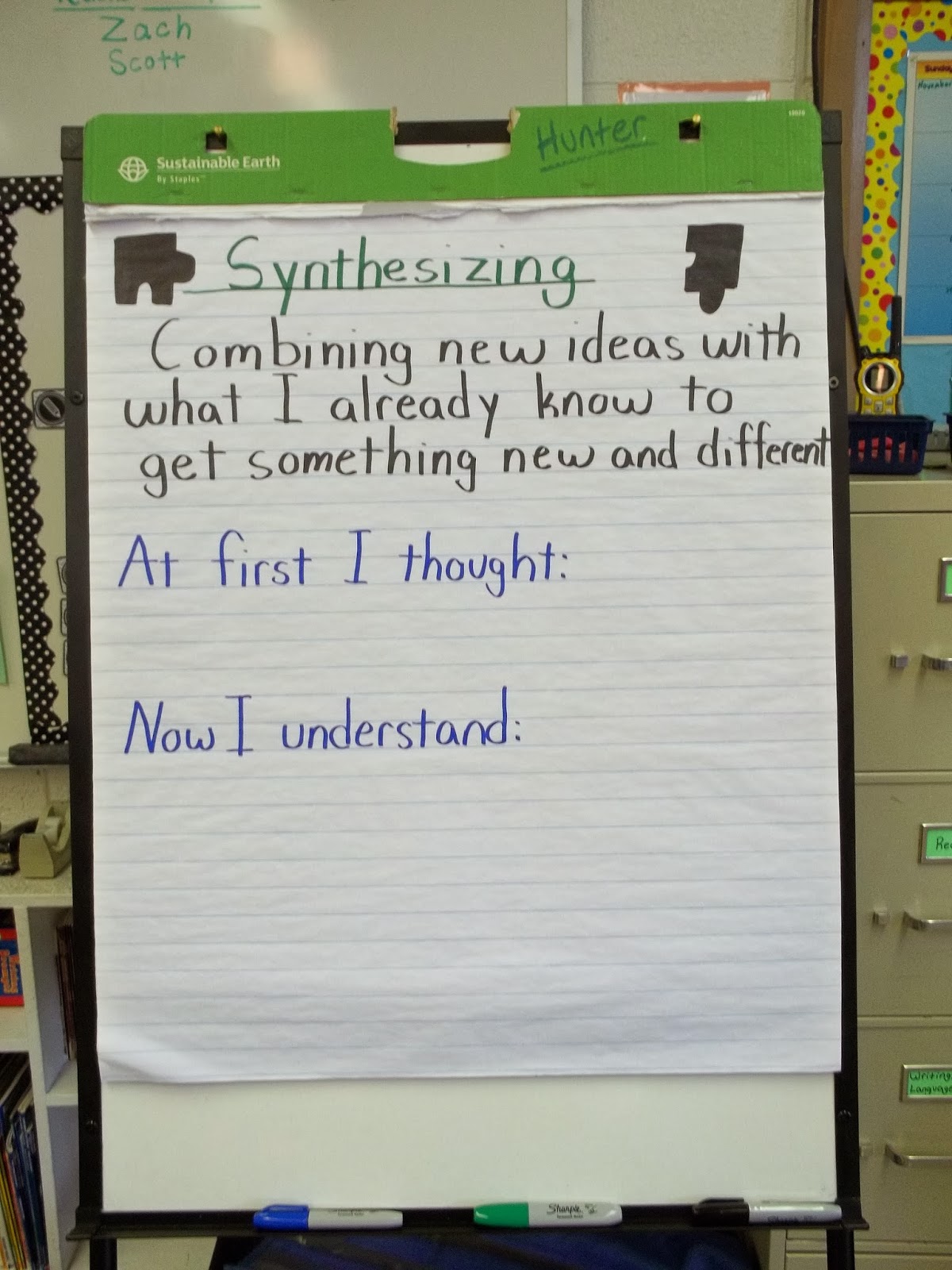
Synthesizing quickly became one of my favorite reading strategies to teach. When I introduce synthesizing I normally start off by asking my students if they have ever read a book or watched a movie where, half way through it, they just "knew" what was going to happen. Then as they continued to watch or read they changed their mind. Most of my kiddos can think of a book or movie, so we spend a few minutes talking as a class about our examples. I then create this anchor chart with my class:
Once we know what synthesizing is, it is time to practice it. I ask my students to grab two post-it-notes and I share a mentor text with them.

Here are a few of my favorite mentor texts to teach synthesizing. All of them have clear story lines that you can use to help teach your students how to synthesize.
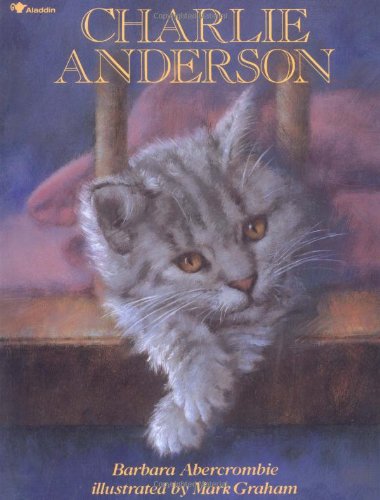
Charlie Anderson
Charlie Anderson by Barbara Abercrombie starts with a cat who shows up one day at a families home. I ask my kids to write down where they think the cat came from...as the story continues they learn this little cat has two homes.

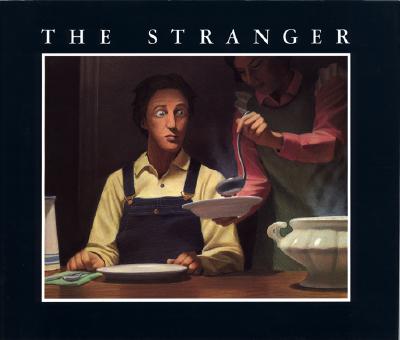
http://slisallied.files.wordpress.com/2012/10/the-stranger-van-allsburg-chris-9780395423318.jpg
The Stranger by Chris Van Allsburg starts out with a stranger being hit by a car. I ask my students who they think the stranger is...as this story continues they are able to synthesize and infer that the stranger is Jack Frost.

The Wednesday Surprise 
The Wednesday Surprise by Eve Bunting is about a little girl and her grandmother. The story makes it seem as if the grandmother is helping the granddaughter learn to read...as the story continues the children learn it is the other way around.

With all of the mentor texts, I share part of the story and have them jot down what they think on the first post-it-note. Then as I finish the story, the students jot down what they know on the second post-it-note. The students put their post-its on the anchor chart before they move to their "comfy" reading spots. Here is an example of our thinking after reading The Stranger:


To help my students stay on track when they read independently I give them a bookmark I created.
I also give my students a graphic organizer to help them record their thinking. You can pick them up by clicking here.
I have found that having my students track their thinking as they read helps them become stronger readers. It also helps me be more on-purpose as a teacher when I conference with my students. I hope these book suggestions and organizers help your students become stronger readers as well! 


Hunter's Teaching Tales Blog
Hunter’s Teaching Tales Facebook Page
Hunter’s Teaching Tales TPT Store


Read More
Posted in Hunter's Teaching Tales, Mentor Texts, Reading | No comments

Wednesday, 6 November 2013

Increase Student Engagement

Posted on 21:00 by the great khali
Recently, my administration set a goal for teachers to increase student engagement and to be more responsive in the classroom.  As the ELA Leader of our school, I held a small-group meeting to discuss what comes to mind when thinking of these two terms.  Every teacher in the group agreed that we could easily increase student engagement by using "every pupil response."  In addition, we would have quicker "responsiveness" to students if we used strategies to get students talking and participating more frequently.  By using every pupil response or EPR, teachers have a quick and easy method for collecting data and making changes to a lesson on the spot.
 

My Favorite Ways to Use EPR

 
1. White Boards- We store them in our table bins in a drawer along with a dry-erase marker in a clean sock.  I have students respond, hide, and then show their responses.  Meanwhile, I am collecting the data on a clipboard.
 
2. Thumbs Up, Thumbs Sideways, Thumbs Down- When I need to know quickly where students are with the lesson, I use this method of EPR.  If there are more thumbs down or sideways than up, I know it is time to change the direction of my lesson.
 
3. Pinch Cards- I keep pinch cards laminated and in desktop bins at my table groups.  When I need a response, students pick these up and pinch the correct answer.  These are great for multiple choice questions!  Instead of copying worksheets, ask the questions and have students use the pinch cards. Easy peasy lemon squeezy!
 
4. Consensogram- Use colored dots on a consensogram to determine where students are with their understanding.  I do not use this simply at the beginning and end of a lesson but throughout the entire time we are learning!  It helps me to see which strategies are working and which need to be adjusted.
 
5. Connecting Cubes- Students have red, yellow, and green connecting cubes at their tables to use to demonstrate understanding.  A red cube on their desk means they need help.  A yellow one means they are confused.  A green cube means they are good to go!  This helps me assess who needs my help immediately and who is comfortable working independently.
 
There are so many more ways to use EPR, but these are just a few of my faves!  If you are like me, you don't have a ton of time on your hands to make things so I thought I would give you a few pinch cards to get you started!  I hope you enjoy!  How do you use EPR in your classroom?  I'd love to hear some tips!
 
Click on the pic below to get your pinch cards!
 
https://drive.google.com/file/d/0B3HaXVciD-DTc1hZZEhET2JWMGc/edit?usp=sharing
 

http://www.leannebaur.com
Read More
Posted in ELA, every pupil response, Leanne Baur, Leanne Baur's Creative Classroom, student engagement | No comments

Rethinking Literature Circle Roles

Posted on 01:00 by the great khali
I love literature circles, but by Grade 8 my students have done the traditional roles so many times that they start to groan if I mention literature circles. So this year I am veering away from the traditional roles and having them just meet to discuss the books they are reading once a week for four weeks.

How does this work?
I had 5 copies of 7 different book titles. Books were put on display on my whiteboard ledge for a few days to generate student interest and buzz. A few days later, copies of the books were dispersed amongst the class for students to dig deeper into the novel to see if it was a good fit for them.
I allowed students to choose their novels and their group members. For their first time discussing books, I wanted them to be comfortable with the people in their groups. In the future, I will create the groups based on reading level, interests, etc.
Students will be required to fill out the graphic organizer below prior to attending a book discussion, but that is the only paper item I will collect.
http://www.teacherspayteachers.com/Product/Free-Book-Club-Discussion-Organizer-959660

I created a simple graphic organizer where they can write down their thoughts as they read their novel, but nothing else paper wise will be handed in. I will rotate through the groups each day to listen in on their discussions and add prompts if needed.

My goal for these book discussion groups is to give students more ownership of their book discussions. Students need to be more prepared for the level of rich discussion that takes place in a high school English classroom, which is not as structured as traditional literature circle rolls.

I am not saying that I won’t go back to the previously established rolls, but we need a break from them for a few months. I am a huge fan of literature circle roles for students in the younger grades that the need the structure they provide so that students can be gradually released to running their own “lit circles” in the middle school years.

You can find the free "book thoughts" graphic organizer on Teachers Pay Teachers by just clicking on the above photo.

I also have my students work on monthly book report assignments, but during months where we have novel discussion groups or literature circles I do not assign an additional book to read.

What do my students do for their monthly book reports?

I assign a different genre for each month, and students can select any appropriate novel to read that meets their reading level. Each month the assignment changes, but works on a three month rotation: 4 R's - writing assignment, Choice Board - creative assignment , Sell This Book - present the novel to the class. 


To get more details about my "Spice Up Your Book Reports" reading program click on the photo below.
http://2peasandadog.blogspot.ca/2013/08/spice-up-your-book-reports.html

How do you use literature circles in your classroom? 

How do you encourage students to enjoy  what they read? 

I would love to hear from you in the comments below.

Until next month,


Read More
Posted in book talks, literacy, literature, literature circles, novel discussion groups | No comments

Monday, 4 November 2013

Pop-Up Flash Card Viewer - My Clever Little Fox Idea!

Posted on 21:39 by the great khali
Hi there! It's Blair from One Lesson at a Time, and I'm here to bring you an idea for your interactive notebooks!

Ok....this is probably going to come out wrong. But do you ever have one of those moments where you have an idea and think to yourself,

"WOW. I AM BEING REALLY CLEVER RIGHT NOW. I AM A CLEVER LITTLE FOX. WATCH OUT WORLD, THERE'S A CLEVER LITTLE FOX IN TOWN."

I swear, I don't usually spend a lot of time announcing to the internet that I am having a clever little fox moment. But THIS, my friends, was one of those moments.

I present to you.....drum roll please.....the Pop-Up Flash Card Viewer. I'll pause while you ooh and agh. Actually, please ignore that last part - I am big-time overselling this and you won't be dazzled at all.

I came up with this idea while I was crumpling a piece of paper up - a piece of paper with a really BAD idea on it. Funny how those things work. :) The viewer and the geometry terms flashcards you see in the pictures are part of my 4th Grade Interactive Notebook Activities Pack for 4.G.1 - Lines and Angles. In the pack, I include the viewer, 2 sets of geometry flashcards, blank flashcards, and bunches of other goodies.

I'm going to use picture instructions to explain how I made it. I'll provide you with a blank template so you can make your own- but once you get the hang of it, you can definitely make them easily with plain paper.

POP-UP FLASH CARD VIEWER DIRECTIONS:

That's it! Super fun and easy! You can put any content you want on the flash cards - just match up the content on the left side with the corresponding rectangle on the right side. Slide the flashcards up and down to see different sections in the viewer. Click on the pictures of the templates below to download them free:

I hope you can use these in your classroom! If so, make sure to leave a comment and tell me what you do with them - I'd love to hear your ideas! :) One more tip - I tried using card stock, but found that regular printer paper works better if you plan to use them IN your interactive notebooks. The card stock doesn't lie flat enough. If you are just going to mount them on construction paper, you may want to use card stock. 

If you want to check out more of my interactive notebook activities, I have complete sets available for 2nd Grade, 3rd Grade, and I am currently working on 4th Grade. Each standard is available individually, as part of a domain bundle, or as part of a mega-bundle of all standards. You can click the pictures below to check them out at my TpT store:


Thanks so much for stopping by All Things Upper Elementary today!

Stay Connected:
One Lesson at a Time
Facebook
Classroom Freebies Manic Monday
Read More
Posted in Blair Turner, flashcards, INB, Interactive Notebook, math, One Lesson at a Time | No comments
Newer Posts Older Posts Home
Subscribe to: Posts (Atom)

Popular Posts

  • Dream House: An Additive Area Project (3rd Grade Common Core)
    The 3rd grade Common Core standards are pushing us to reach a deeper understanding of many topics. For example, area is covered in much more...
  • Guest Post, Beyond Traditional Math: Common Core Math Can Be Rigorous AND Fun
    It is true, there ARE Common Core activities that are actually fun. In this stressful time of accountability and standardized testing, it is...
  • Language Arts...Fitting It All In!
    Greetings Friends! Mr. Hughes here of Created by MrHughes . I love my monthly slot here on ATUE! It is fun to share with you and learn from...
  • Teachers Helping Teachers--and Animals?
    I know what you are thinking . . . she's crazy.  Or, perhaps, you are thinking--at this time of year, my students are "animal enoug...
  • 5 Ways to Use a Hundreds Chart in the Upper Grades
    Hi there, upper elementary teachers! It's Blair from One Lesson at a Time , here to bring you some tips for using hundreds charts in the...
  • Motivational Quotes for State Testing {Free Posters!}
    Hi friends! It's Blair, from One Lesson at a Time . Well, it's about that time again. You know what time. Testing time. Everybody...
  • Creating Classroom Rules
    Every year I start out by talking to my fourth graders about rules.   But by fourth grade, they already know, on pa per, what classroom rule...
  • Perimeter Problems and Area Art!
    As you may have figured out, math is a true passion of mine as is finding ways to push students' thinking about math (and other things!)...
  • Angles, Angles Everywhere!
    Good morning! As many of you know I am a lover of anything and everything to do with an Interactive Notebook (INB) . I am here today to shar...
  • Easy Decimal Game: This Means War!
    Right before our February vacation, my fourth graders started decimals.  To start out, I always find it's easiest to equate decimals wit...

Categories

  • #ATUE
  • 100s Day
  • 2 Brainy Apples
  • 2 Fulbright Hugs
  • 2brainyapples
  • 2peasandadog
  • 3.nbt.1
  • 3.nf.1
  • 4.nf.1
  • 4mulaFun
  • 4th grade
  • 4th grade math
  • 5th grade
  • 5th grade math
  • 5th grade Reading Review
  • 6th grade
  • A Cat Named Haiku
  • Abstract Nouns
  • activity
  • Address Labels
  • adverbs
  • Air Fronts
  • Alexander rich last sunday
  • algebra
  • All Things Upper Elementary
  • Amber Thomas
  • Amber Thomas's Classroom Favorites
  • Amy Alvis
  • Amy Satterfield
  • and Share
  • Andrea M. Bentley
  • anglegs
  • angles
  • ANSWER method
  • AppleSlices
  • April Poetry Month
  • area
  • Artistry of Education
  • Aspire to Inspire
  • assessment
  • attributes
  • atue
  • ATUE takes on!
  • Augmented Reality
  • authentic performance tasks
  • back to school
  • Back to School Bargains
  • Back to School to do List
  • backward timing
  • Bar Modeling
  • Bar Models
  • behavior
  • Behavior Chart Template
  • Beyond Traditional Math
  • bingo
  • biographies
  • Blair Turner
  • Blockhead the story of Fibonaccie
  • Book Bloggin' Buddies
  • book blogging buddies
  • Book Clubs
  • Book Creator
  • Book Share
  • book talks
  • book trailers
  • books
  • boring
  • bucket filler
  • bucket fillers
  • bullying
  • bundle
  • caricature
  • CCS Math
  • CCSS
  • CCSS Math
  • Chapter 3
  • character traits
  • cheap present
  • Cheat Sheet Ring
  • christmas
  • circuits
  • class dojo
  • Class Themes
  • classdojo
  • Classifying Animals
  • classroom community
  • Classroom Decor
  • Classroom Game Nook
  • classroom library
  • classroom management
  • classroom organization
  • Classroom Stationery
  • Classroom Teacher Report Sheet
  • Classroom Twitter Board
  • clickers
  • close reading
  • Close Reads
  • Cloud Types
  • Co-teaching
  • Collaboration
  • collaboration cuties
  • colonies
  • Coloring Page
  • comics
  • commercials
  • Common Core
  • Common Core and So Much More
  • common core writing
  • communication
  • Competition
  • Comprehension
  • computers
  • concept mapping
  • Concrete Nouns
  • conferences
  • connect writing to reading
  • connection to math
  • constructed response
  • Constructed Response Assessments
  • cooperation
  • cooperative learning
  • Corrina Allen
  • Crafting Connections
  • Craftivity
  • Create
  • Created by MrHughes
  • Creating Classroom Rules
  • creative writing
  • creativity
  • cross-curricular
  • cross-curriculum
  • cue cards
  • cute valentines
  • Daily Dose
  • Data collection
  • Deb
  • decimal form of fractions
  • Decimal Numbers
  • decimals
  • deck of cards
  • dialogue
  • dice
  • dictionary skills
  • differentiation
  • Dinosaur Deals
  • discovering activity
  • division
  • DocsTeach
  • download
  • Earth
  • Earth Day
  • easter
  • easy
  • eBooks
  • Eclectic Educating
  • Edmodo
  • educational technology
  • educents
  • Educreations
  • ELA
  • electricity
  • elementary math
  • Elizabeth Stavis
  • emotions
  • end of the school year
  • engagement
  • engineering
  • English Language Arts
  • ESL
  • Estimating
  • Every Day Counts Math
  • every pupil response
  • Exit Slips
  • experiment
  • extended response
  • fact fluency
  • first days of school
  • five senses
  • flapjack
  • flashcards
  • flippable
  • Flipped Classrooms
  • foldable
  • Formative Assessment
  • Fourth Grade
  • Fourth Grade Studio
  • Fourth Grade Test Prep
  • fraction equivalents
  • Fraction of a set
  • fractions
  • free
  • Free for All
  • FREEBIE
  • freebies
  • Friday Free Writing
  • fun
  • Fun 4 All
  • Gabrielle Dixon
  • game
  • Games
  • GCF
  • Genius Hour
  • genre
  • geography
  • Giveaway
  • goal setting
  • Goals
  • grading versus noticing
  • Grading with Labels
  • grammar
  • GRASPS
  • greedy triangle
  • groups
  • Guest Contributor Form
  • guest post
  • Guest Poster badge
  • Guest Posters
  • Guided Reading
  • Haiku
  • hands-on
  • hands-on learning
  • Heather LeBlanc
  • Historian
  • holidays
  • How to Clean Your Desk
  • hundreds charts
  • Hunter's Teaching Tales
  • I Love My Classroom
  • idioms
  • IEP Cheat Sheet
  • If you hopped like a frog
  • INB
  • incentives
  • Independence day
  • inexpensive
  • informational texts
  • informational writing
  • integrating content
  • integration
  • Interactive Learning
  • Interactive Notebook
  • intro
  • Inverted Classrooms
  • iPad
  • iPad apps
  • iTeach 1:1
  • Jamie Riggs
  • Jennifer Findley
  • Jennifer Smith-Sloane
  • Joey Udovich
  • Journey Through the Text
  • Kate's Classroom Cafe
  • Katie Lately
  • Keith Geswein
  • Kelly Anne
  • Kimberlee Fulbright
  • kindness
  • Kristen Stull
  • Kristin Kennedy
  • Labels- Learn With Leah
  • Ladybug's Lounge
  • Language Arts
  • Last Day of School
  • LCM
  • leadership
  • Leah Fullenkamp
  • Leanne Baur
  • Leanne Baur's Creative Classroom
  • learning goals
  • learning styles
  • Lesson of a Story
  • Letters to Incoming Class
  • life science
  • line plots
  • linky
  • linky party
  • literacy
  • Literacy Center
  • literary devices
  • literature
  • literature circles
  • logic
  • Long Division
  • Looking From Third to Fourth
  • Love that Dog
  • lowest terms
  • making inferences
  • Maneuvering the Middle
  • manipulatives
  • Martin Luther King
  • Mary Bauer
  • matching
  • math
  • math and writing
  • math fact fluency
  • Math in Focus
  • math is real life
  • Math Learning Center Stations
  • math love
  • Math Manipulatives organization
  • Math MCAS Review
  • Math multistep word problems
  • Math Science Social Studies...Oh my
  • math valentines
  • math vocabulary
  • Math Workshop
  • MCAS
  • measure to the nearest quarter inch
  • measurement
  • media
  • Meg Anderson
  • Melissa Mazur
  • Melissa O'Bryan
  • Memories
  • mental health
  • mentor sentence
  • mentor text
  • Mentor Texts
  • mentoring
  • Messy Desks
  • Middle School Math Moments
  • MissMathDork
  • Mobile
  • MobyMax
  • MOOD
  • More Time 2 Teach
  • Morning Meeting
  • Morning Meeting Greeting
  • Motivation
  • Mr. Magician
  • MrHughes
  • Mrs. Thomas's Classroom Favorites
  • multiplication
  • music in the classroom
  • national archives
  • National Poetry Month
  • nerdy valentines
  • New Student Preparation
  • New Year's
  • notebooking
  • Noun Hunt
  • nouns
  • novel discussion groups
  • Number Lines
  • number of the week
  • observation
  • on-line learning tool
  • One Lesson at a Time
  • Open Response
  • opinion writing
  • Order Up!
  • organization
  • ornaments
  • parent's night
  • parents
  • partner work
  • Patriot Day
  • performance assessments
  • performance tasks
  • perimeter
  • perseverance
  • persuade
  • persuasive writing
  • pi
  • pi day
  • Pigs in the Pantry
  • pinterest
  • Plan B
  • Planner Labels
  • podcasting
  • Poetry
  • Poetry Elements
  • Poetry Unit
  • Point of View
  • positive
  • positive points
  • pre assessment
  • Precipitation
  • presents for your students
  • prime factorization
  • Printable Forms
  • Printable Packet
  • problem solving
  • professional development
  • Prose
  • punctuation
  • Puppet Pals
  • puzzles
  • Pythogoras and the rations
  • QR Code Labels
  • QR Codes
  • quadrilaterals
  • questioning
  • quotations
  • Rachael Parlett
  • RAFT writing tasks
  • read-aloud round-up
  • Reader's Theater
  • Reading
  • reading across the curriculum
  • reading across the curriculum G is for Google
  • reading resources
  • reading response
  • reading social studies integration
  • Reading Workshop
  • real world
  • real world application
  • RebeccaHallock
  • rebus
  • recording
  • Recruiting Guest Bloggers
  • rectangles
  • reference sources
  • Reflection
  • Regions
  • relays
  • remediation
  • research project
  • Response to Reading
  • Review Game
  • revision
  • Revision Tips
  • rhombus
  • Right Down the Middle
  • rigor
  • risk taking
  • rounding
  • roundup
  • Rubric Labels
  • ruler
  • Sale
  • salt dough
  • salt ornaments
  • save fred
  • school projects
  • science
  • science and writing
  • science labs
  • science notebooking
  • Science writing integration
  • Seating Charts
  • Secrets Revealed
  • Sentence Fragments
  • September 11th
  • SET
  • shearerlysadler4thgrade
  • Short Stories
  • Shut the Door and Teach
  • sight words
  • Sign Up Board
  • Singapore Math
  • snow removal
  • Social skills
  • social studies
  • social studies and writing
  • solar system
  • sorting
  • spaghetti and meatballs for all
  • Spain
  • Special Education
  • Spring Fever Sale
  • Square Numbers
  • squares
  • St. Patrick's Day
  • Standardized Testing
  • Standards for Mathematical Practice
  • standards-based
  • State Float Project
  • States
  • states and capitals
  • States and Regions Unit
  • STEM
  • storytelling
  • stressed
  • student engagement
  • student engagment
  • Student Materials Shelf
  • Student Organization
  • student portfolios
  • Students share news
  • study
  • Successful 50 Minute Classes
  • summer
  • summer learning
  • Summer Project Series
  • Summer Reads
  • Symmetry
  • synonyms
  • tabitha carro
  • take time to write
  • Tammi Booth
  • task cards
  • Teach
  • Teacher Appreciation Week
  • teachers
  • Teachers working together
  • TeachesThirdinGeorgia
  • teaching
  • Teaching Abroad
  • Teaching Books
  • teaching elementary math
  • Teaching Special Thinkers
  • Teaching To Inspire in 5th
  • team building
  • Team Planning Form
  • technology
  • TEFL
  • Ten Marks
  • test prep
  • testing
  • testing brain breaks
  • thank you
  • thankful
  • thanksgiving
  • the balanced classroom
  • The Brown Bag Teacher
  • The Peanut Gallery
  • The Teacher Studio
  • Theme
  • TheRoomMom
  • thesaurus
  • Timesavers
  • TPT
  • TpT Sale
  • Upcycling Craft Project
  • valentines
  • valentines day
  • Vertebrates
  • video
  • videos
  • Vista Print
  • vocabulary
  • Warm Ups
  • Water Cycle
  • Weather Unit
  • White Boards
  • Whole class game
  • Whst's your angle Pythagras
  • Wild About Fifth Grade
  • word problems
  • Word Search
  • Wordle
  • writers workshop
  • writing
  • writing connection
  • writing cycle
  • writing in the classroom
  • writing portfolios
  • writing projects
  • Writing Workshop
  • Yearn to Learn
  • YouTube

Blog Archive

  • ▼  2014 (62)
    • ▼  April (13)
      • Guest Post, Beyond Traditional Math: Common Core ...
      • Easy Fraction of a Set Game
      • Introducing Division Concepts
      • Testing Time is Upon Us!
      • Fun, Quick, and Easy Reading Comprehension Games f...
      • Guest Post: Kimberlee Fulbright, Close Reading J...
      • I Have... Who has.... {Freebie + Giveaway!}
      • Number Line Frustration? Walk the Walk!
      • Creating polygons in the classroom
      • Bringing Earth Day into the Classroom
      • Guest Post Lucy Ravitch: How Decimals and Fractio...
      • Test Incentives and Motivational Ideas
      • Guest Post from The Brown Bag Teacher: Augmented ...
    • ►  March (16)
    • ►  February (15)
    • ►  January (18)
  • ►  2013 (241)
    • ►  December (15)
    • ►  November (18)
    • ►  October (24)
    • ►  September (19)
    • ►  August (15)
    • ►  July (20)
    • ►  June (20)
    • ►  May (25)
    • ►  April (19)
    • ►  March (21)
    • ►  February (18)
    • ►  January (27)
Powered by Blogger.

About Me

the great khali
View my complete profile