amanda beth online

  • Subscribe to our RSS feed.
  • Twitter
  • StumbleUpon
  • Reddit
  • Facebook
  • Digg

Wednesday, 19 March 2014

A Fun, Creative, and Differentiated Approach to Teaching Spelling

Posted on 02:00 by the great khali
Hello again friends! It's Jen Bengel here from Out of This World Literacy!

I wanted to talk about a fun, new way to teach spelling. I don't know about you, but I am tired of the old traditional ways of teaching spelling, where all the students in the room memorize the same 20 words each week. There is no differentiation in learning with this method. What if students already know how to spell all 20 words? Or what if the words are just too challenging? In either situation, no real new learning will occur all week!


But, there is a way to teach spelling in a way that every student will be challenged at his/her own level! And the focus will be on studying patterns, not memorizing a list of words. Let me show you how by going over the 5 days of instruction in this spelling process:

Day One: Whole Group Lesson and Choosing Spelling Words


Step One: Teach a spelling or word study skill in a mini lesson format to the entire class.  During the lesson, the students will help in making a list of words that follow the particular spelling pattern for the week.


Step Two: Students will choose their spelling words from the list on the class chart.  You can determine how many words they choose from the list each week.  Have them copy their words onto a spelling record sheet that they will use to study with the remainder of the week.  Be sure to check that students copied their words correctly onto their cards.

Day Two: Review and Independent Practice


Step One: Spend some time reviewing the mini lesson anchor chart from yesterday.  Create a new chart of what you notice about the words and what you are still wondering. 


Step Two: provide students with independent activity options so that they can explore their spelling words and patterns.  You may already have several ideas for spelling activities.  Some examples might include, taking apart words by syllables, breaking words into base word and suffix or prefix, or finding synonyms and antonyms for words.  The ideas are limitless!

Day Three: Reflection of New Learning


Step One: One of the best ways to learn is to teach.  So, today's lesson will be all about the students' teaching each other.  Not only does this activity honor and value that what students have to say is important, it is also a great way to hold students accountable for their independent work and new learning.

Step Two: Partner students up and have them teach each other what they discovered during independent practice yesterday.  Once students have finished sharing with their partners, have them share what they heard their partner say with the entire class.

Day Four: Partner Reteaching, Tips, and Practice Test


Step One: Have students partner-up with their individual spelling lists.  Encourage each student to reteach the spelling/word work skill in their own words to their partner.  Then have them share one or two tips with each other that helps them remember the spelling/word work skill.

Step Two: Pass out blank paper for students to complete their spelling practice test.  Instruct students to give the practice test to their partners.  Monitor students as one reads the words and the other takes the test.

Step Three: Have students grade each other's practice tests.  If they missed any words, have them circle them and remember to practice them before the test tomorrow.

Step Four: Gather the class together and have them share the spelling/word work tips they talked about with their partners.  Students can write down any tips they might use to help them take the test tomorrow. 

Day Five: Partner Spelling Test, What's Next...?


Step One: Have students exchange their spelling lists with their partners.  Have students give each other their spelling tests.  Monitor the class as they take their tests.

Step Two: Once everyone is finished taking their tests, have them gather back together for a class discussion and review.  Remind students that just because they took their spelling tests and are moving on to new words and patterns next week does not mean they should forget all their learning.  

Make a class list of all the ways they can use what they learned in the future.

How can they apply what they learned during reading?  Writing?  And other subjects?

Thank you so much for stopping by at All Things Upper Elementary!!  Click on the links below to see some great spelling resources...for FREE!


Best wishes to you all!!

Jen Bengel
Find me on Pinterest
Follow me on my Blog
Check out some resources in my TpT store


Read More
Posted in | No comments

Tuesday, 18 March 2014

5 Ways to Use a Hundreds Chart in the Upper Grades

Posted on 02:00 by the great khali

Hi there, upper elementary teachers! It's Blair from One Lesson at a Time, here to bring you some tips for using hundreds charts in the upper grades. Hundreds charts are a fabulous math tool for all elementary students. Here are some of my favorite ways to make them work for upper elementary kiddos!

1. Race To 100: 2-by-1 Multiplication Practice

This is a fun and easy-to-prep game to reinforce 2-by-1 digit multiplication. Read more about this idea by clicking {HERE}.

2. Identifying Prime and Composite Numbers

Have students use two different colors to highlight prime and composite numbers. Finished charts should look like this:

3. Rounding to the Nearest 10

A hundreds chart is a great way for students to visualize numbers that round to each group of ten. Use one color to highlight numbers that round to 10, another color to highlight numbers that round to 20, and so on. Here's an example of a completed chart:

4. Identifying Multiplication Patterns

A hundreds chart is a great tool for identifying multiplication patterns. Have students color in multiples of each one-digit number and then discuss or write about the patterns that they notice developing. Here are some example charts:


5. Generating Equivalent Fractions

Use a hundreds chart as a jumping off point to discuss equivalent fractions. Ask students to color in half of the hundreds chart. What fraction is equivalent to 1/2? How do they know? Can they show 1/2 in another way on the hundreds chart? Repeat the activity with 1/4. Students should be able to easily divide the chart into fourths and use arrays or counting to find the number of squares that make 1/4. Identify the equivalent fraction with denominator 100. Ask students what fraction out of 100 is equivalent to 3/4. Repeat with other fractions. Show each fraction on the chart in multiple ways. Here are some example charts:

This is, of course, by no means an exhaustive list! Sound off in the comments about your favorite way to utilize hundreds charts! And make sure to stop by my blog, One Lesson at a Time, to pick up this FREE hundreds chart foldable for your interactive notebooks! Click on the picture to go to the post and download it.

Facebook Page
Teachers Pay Teachers Store

Read More
Posted in Blair Turner, hundreds charts, math | No comments

Monday, 17 March 2014

The Pinterest Pledge

Posted on 17:21 by the great khali

Hello All Things Upper Elementary Readers,

It is Kristy from the 2 Peas and a Dog Blog. I am here to share some quick tips for keeping your Pinterest addiction manageable. If you are anything like me you have access to Pinterest on your phone, tablet and computer, and it can be tempting to pin all day long.

Pinterest is a great tool for teachers because it is full of so many great ideas that we would not normally be exposed to. I feel like Pinterest should be considered a form of professional development because most of the pins I follow are to reputable bloggers who have excellent ideas.

But how do you organize your pins? Lately, I have been seeing a lot of people pinning my pins to general Pinterest boards called "Education". If you pin all of your teaching pins to one board called "Education" how long will it take you to search for the one specific pin you pinned months ago?

I am challenging all of you to take the Pinterest Pledge to clean up your digital PD system.


Create new topic specific boards that are relevant to you: classroom organization, classroom management, math, language, etc. All my of boards are organized by subjects that I teach or teaching concepts like back to school or classroom management.

Reorganize your old Pinterest boards by re-pinning old pins onto their new specific boards. This also gives you a chance to delete pins you did not find useful or are no longer relevant to your teaching assignment. 

Rearrange your Pinterest boards to be alphabetized or by theme: teaching, home life, cottage life etc. This will help you sort through your boards quickly and narrow in on the idea you want. I organize my teaching stuff at the top and then at the bottom of my page are my home and food boards. Left click, hold and move your Pinterest board around to where you want it to be positioned on your Pinterest site. 

Set a daily Pinterest time limit. This can accomplished by setting a timer on your phone, iPad or computer. There will always be cool and interesting pins to look at on Pinterest, but it is important for you to take time for yourself and your family as well. 

Check your pins before you pin them. I open my potential pins in a new tab before I pin them to a board. Recently I saw this awesome pin about teacher fonts. When I clicked through to the pin, I did not find a site with a link to "Awesome Teacher Fonts", I got a blog about Mood Disorders. 

Happy Pinning! 

Click here to see the 2 Peas and a Dog Pinterest Boards.

Kristy @ 2 Peas and a Dog
Read More
Posted in 2peasandadog, organization, pinterest, teaching, technology | No comments

Friday, 14 March 2014

Why Didn't I Think of That? {Page Protectors}

Posted on 02:30 by the great khali
Way back in November, I blogged about a book called Embedded Formative Assessment by Dylan Wiliam that changed the way I teach.  I encountered several "aha!" moments when I read that book, and today I'm going to blog about another one.  Many of you may already know this teacher-friendly trick, but I want to share it anyway, just in case any of you are unaware like I was!

Do you have a set of these white boards?


Wonderful, aren't they?  Each student can have a white board and display his/her answer on his/her own board.  They are perfect for small group use, and even large class use. Yes, the students like to draw and doodle on them, but overall, students using white boards are usually quite engaged in the lesson. You can quickly get an idea of the students that are understanding the concepts being presented, and those that are still confused or struggling to grasp a certain concept.  (You know... just watching our students' nonverbal cues can tell us teachers a lot.  Students that confidently write their answer as quick as a wink KNOW the concept.  On the other hand, students who pause and try to covertly steal a glance at their neighbor's board do not quite understand the new learning.)

These white boards work great for practicing spelling patterns, math problems, etc.  However, they aren't the answer for everything.  They don't quite work for practicing map skills or drawing the hands on a clock.  Drumroll... that's where PAGE PROTECTORS come in handy!  Did you know dry-erase markers and erasers work just as well on a page protector as they do on a white board?!?!?  Yes, it's true!  (When I read that in Wiliam's book, I sat there and thought, I've been teaching for 15 years, and I didn't KNOW that?  Why didn't I think of that??)

Just slip a paper inside a sleeve and voila!  You have a new all-student response system that you can use with your entire class to keep them engaged!  Want to practice finding locations on a map using longitude and latitude?  Just hand out maps, page protectors, and dry-erase markers and you're all set for whole-group practice!  Want to have students practice finding the place value of a certain digit in a number?  Try this method!  

Below are just some of the ways that I have used page protectors in my class:


During our genre unit of study, I gave each student one of these genre lists, a marker, and an eraser.  Students joined me in the classroom library area.  I held up a book and read the summary on back, students determined the genre by circling the correct term on their sheet.

Colored cardstock provides a bright alternative to white boards!

Perfect for labeling maps!

Works great with any graphic organizer!

These graphic organizers are FREE on TPT (compliments of Nicole Swisher!).
Please leave a comment and let me know what other papers you slip inside page protectors to allow for individual responses during a whole-class activity!  I would love to hear more ideas!

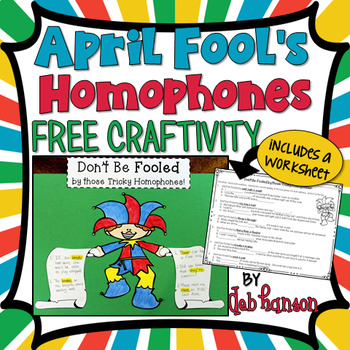
Before I sign off for this month, I have two other things I would like to quickly mention!  First of all, I recently added a FREE April Fool's Day craftivity to my store!  If you haven't tried a craftivity with your students yet, this freebie is a perfect one to try!

Finally, I have a "Pin It to Win It" giveaway going on at my blog, Crafting Connections, right now! I will be giving away pinned resources to FIVE winners!

Until next month!

Deb
Read More
Posted in Crafting Connections, Deb | 1 comment

Thursday, 13 March 2014

Mapping with Circuit Boards: Guest Post Aspire to Inspire

Posted on 03:00 by the great khali
Hi, fellow Inspirers! I'm Kristen from Aspire to Inspire. One of the big milestones in 5th grade social studies classes is learning the names, locations, and capitals of the 50 United States. In my classes, this learning goal was spread out over many months with students learning and testing over one region of states at a time. They took a final test of all states and capitals in the spring. For many students, this was their first experience taking ownership of a significant learning goal on their own. To help them prepare, students used textbook maps to label and color blank regional maps. We then brainstormed mnemonic devices based on different learning styles to help learn the information. We also spent a few days a month as a class practicing the locations and capitals using a blank map on the SmartBoard.

Even with all the strategies presented in my class, however, the most innovative, hands-on tool that students used to learn states and capitals came from science class of all places: circuit boards.  The (literally) brilliant idea to combine the study of electricity and geography using homemade circuit boards was presented to me by our 5th-grade team's science teacher. The basic idea is for students create a circuit board on which they complete electrical circuits by correctly touching wires to a state and its corresponding capital. Each state and capital is connected by a foil conductor strip, and the energy source is a 9-volt battery.

The idea of playing with electricity may sound a little frightening, but this activity is completely safe and is easy for upper elementary students to complete!

Prior Knowledge
On the social studies end of this, students will need to have been introduced to at least one region of states and capitals. On the science end, students will need to have a knowledge of circuits and electricity.

Supplies
file folder
blank map of states with list of corresponding state capitals (We used regional maps for this project.)
scissors
hole punch
aluminum foil
transparent or masking tape
electronics wire
small light bulb with holder
9-volt battery 
battery cap with electronics wires

Easy-to-find classroom supplies
Create the Circuit Board
First, punch one hole in each state on the map. Then, punch one hole next to each of the state capitals. I did a soft fold-over of the map and capitals and put the paper about halfway in the hole punch before punching so that I could get a full circle-shaped hole and not bend the paper too noticeably.

You'll need to decide to punch the hole either on the exact location of the capital or somewhere in the middle of the state. In some regions, some capitals are very close together, which could be problematic when attaching the conductor foil. 
Next, turn to the backside of the map and capitals. Cut thin strips of foil long enough to connect the holes from the states to the holes next to the capitals. For each state and capital, line up the foil strip so that the state hole and its capital hole are covered with foil. Then, use the tape to adhere the foil strip. Cover the entire strip of foil with tape. Continue until all states and capitals have foil trails that are taped to the page.


IMPORTANT:
*Start with the states and capitals that have the least distance between them. Tape those foil trails down first.
*It is important that the foil strips do not directly touch one another so make sure they are completely covered in tape.
*Make sure the foil strip does not cover any part of the holes belonging to other states or capitals.


All taped down and ready to go
When all foil has been attached, adhere the map and capitals list to the file folder. You should only see the foil-covered holes.

Ready to test my knowledge of states and capitals!
Assemble the Battery and Bulb Wires
First, attach a battery cap to the top of the 9-volt battery, which will be the source of the electricity. Attach one of the cap's wires to one of the bulb terminals. Attach a small piece of electronics wire to the other bulb terminal. Make sure that the two "loose" ends of wire are stripped back enough so that the wires will easily make contact with the foil surfaces.

You may be able to create a more stable battery apparatus with available lab equipment. You could even use something other than a light like a buzzer.
Completing the Circuit
To complete the circuit, students will take one end of the wire that extends from the battery and touch it to the foil-filled hole of one of the states on the map. Then, the students will touch the other end of the electronics wire that extends from the bulb to the foil-filled hole next to the state's capital on the list. If the state and capital combination is the correct, the circuit will be complete, and the small bulb will light up. If it is incorrect, the bulb will not light up. 


Got it!
Sorry, try again!
Social studies can be a love-it or hate-it class for many students. As a social studies teacher, it can be a challenge to come up with meaningful hands-on learning activities. Being able to partner with my teaching team to develop cross-curricular ideas like this offers students some new and creative ways to take charge of their own learning. The beauty of this activity is that it can be modified for any subject matter that uses matching. It may provide students with a different view of a subject and how it connects to other subjects. It also may build their confidence and interest in subject areas in which they struggle or show little interest. (I'm no science whiz so if I was able to create something like this and have it work, I'd feel like a science superstar.) Overall, this activity really "lit up" both the science and social studies classrooms!

Come Aspire to Inspire with me! You can find me here:

Aspire to Inspire Blog

Aspire to Inspire on TPT

Aspire to Inspire on Pinterest

Aspire to Inspire on Facebook


Read More
Posted in activity, Aspire to Inspire, circuits, cross-curriculum, electricity, geography, hands-on, Kristen Stull, matching, Motivation, science, social studies, states and capitals, study | No comments

Wednesday, 12 March 2014

Top 5 Reasons to Celebrate PI DAY!

Posted on 03:00 by the great khali
My favorite holiday is just a few days away!  No, I don't mean St. Patrick's Day (but I do love a good homemade Reuben!) I mean PI DAY!  

Pi day is my absolutely favorite day of the year... no, really, it is!  Not a fan? Not sure why you should celebrate it?!  WHAT?!  Okay... here goes...


Reason #5.... PIE is a CIRCLE which means you can get away with bringing in a sweet treat for your kiddos AND it will be content appropriate!  You can use the PIE like CAKE to celebrate Einstein's birthday (which also happens to be 3/14)!

Reason #4.... ALL THE PI SHIRTS!!!  Really, you can't have enough!  Check out some of the shirts I've collected over the years.

Reason #3.... Pi is an irrational number! Because it goes on forever, you can build a chain to help you visualize the "lack of patterns".

Reason #2....Pi is the ratio of a circle's circumference to it's diameter - you could have students measure tons of circles and "discover" pi on their own!  (Think "around" and "across")

AND THE NUMBER ONE REASON TO CELEBRATE PI DAY IS....

Reason #1... Why do you need a reason to get kiddos EXCITED about math!?  Have a great day, make a fool out of yourself!  Get your kiddos EXCITED to have FUN about a NUMBER!!

I hope you have a wonderful Pi day!  If you want to read more about how we'll be celebrating Pi day in my room this year, or want to join in on my GIVEAWAY, check out my blog (www.missmathdork.com) tomorrow 3/13 (or possibly later tonight when I get home!) for some awesome ideas :)


Want to stay in contact with me?  Here are some awesome options:
MMD on Facebook
TPT Store
Blog
Pinterest
MMD requests

Read More
Posted in Jamie Riggs, MissMathDork, pi, pi day | No comments

Tuesday, 11 March 2014

Lucky Thoughts

Posted on 01:30 by the great khali
I can't believe it is already mid March! My class has spring fever as we are approaching our Spring Break next week.  This week, I am doing some St. Patrick's Day lessons. As we recently learned about writing dialogue using proper quotations this leprechaun writing craft helped culminate our learning.

I began by reading this cute story with a great theme of friendship.
At the beginning of the story the leprechaun and dog are at odds with each other over a misunderstanding. But in the end they realize they are true friends.


After reading aloud the story, I opening up a class discussion about what students felt lucky for.
They then wrote their ideas using quotations as if they were lucky leprechaun.


What are you most lucky for? Share your thoughts in the comments.

~Denise


Find me online

My blog

TPT store

Pinterest


Read More
Posted in dialogue, quotations, St. Patrick's Day, Yearn to Learn | No comments
Newer Posts Older Posts Home
Subscribe to: Posts (Atom)

Popular Posts

  • Dream House: An Additive Area Project (3rd Grade Common Core)
    The 3rd grade Common Core standards are pushing us to reach a deeper understanding of many topics. For example, area is covered in much more...
  • Guest Post, Beyond Traditional Math: Common Core Math Can Be Rigorous AND Fun
    It is true, there ARE Common Core activities that are actually fun. In this stressful time of accountability and standardized testing, it is...
  • Why Didn't I Think of That? {Page Protectors}
    Way back in November, I blogged about a book called Embedded Formative Assessment by Dylan Wiliam that changed the way I teach.  I encounte...
  • Teachers Helping Teachers--and Animals?
    I know what you are thinking . . . she's crazy.  Or, perhaps, you are thinking--at this time of year, my students are "animal enoug...
  • Motivational Quotes for State Testing {Free Posters!}
    Hi friends! It's Blair, from One Lesson at a Time . Well, it's about that time again. You know what time. Testing time. Everybody...
  • Creating Classroom Rules
    Every year I start out by talking to my fourth graders about rules.   But by fourth grade, they already know, on pa per, what classroom rule...
  • 5 Ways to Use a Hundreds Chart in the Upper Grades
    Hi there, upper elementary teachers! It's Blair from One Lesson at a Time , here to bring you some tips for using hundreds charts in the...
  • Easy Decimal Game: This Means War!
    Right before our February vacation, my fourth graders started decimals.  To start out, I always find it's easiest to equate decimals wit...
  • Angles, Angles Everywhere!
    Good morning! As many of you know I am a lover of anything and everything to do with an Interactive Notebook (INB) . I am here today to shar...
  • Perimeter Problems and Area Art!
    As you may have figured out, math is a true passion of mine as is finding ways to push students' thinking about math (and other things!)...

Categories

  • #ATUE
  • 100s Day
  • 2 Brainy Apples
  • 2 Fulbright Hugs
  • 2brainyapples
  • 2peasandadog
  • 3.nbt.1
  • 3.nf.1
  • 4.nf.1
  • 4mulaFun
  • 4th grade
  • 4th grade math
  • 5th grade
  • 5th grade math
  • 5th grade Reading Review
  • 6th grade
  • A Cat Named Haiku
  • Abstract Nouns
  • activity
  • Address Labels
  • adverbs
  • Air Fronts
  • Alexander rich last sunday
  • algebra
  • All Things Upper Elementary
  • Amber Thomas
  • Amber Thomas's Classroom Favorites
  • Amy Alvis
  • Amy Satterfield
  • and Share
  • Andrea M. Bentley
  • anglegs
  • angles
  • ANSWER method
  • AppleSlices
  • April Poetry Month
  • area
  • Artistry of Education
  • Aspire to Inspire
  • assessment
  • attributes
  • atue
  • ATUE takes on!
  • Augmented Reality
  • authentic performance tasks
  • back to school
  • Back to School Bargains
  • Back to School to do List
  • backward timing
  • Bar Modeling
  • Bar Models
  • behavior
  • Behavior Chart Template
  • Beyond Traditional Math
  • bingo
  • biographies
  • Blair Turner
  • Blockhead the story of Fibonaccie
  • Book Bloggin' Buddies
  • book blogging buddies
  • Book Clubs
  • Book Creator
  • Book Share
  • book talks
  • book trailers
  • books
  • boring
  • bucket filler
  • bucket fillers
  • bullying
  • bundle
  • caricature
  • CCS Math
  • CCSS
  • CCSS Math
  • Chapter 3
  • character traits
  • cheap present
  • Cheat Sheet Ring
  • christmas
  • circuits
  • class dojo
  • Class Themes
  • classdojo
  • Classifying Animals
  • classroom community
  • Classroom Decor
  • Classroom Game Nook
  • classroom library
  • classroom management
  • classroom organization
  • Classroom Stationery
  • Classroom Teacher Report Sheet
  • Classroom Twitter Board
  • clickers
  • close reading
  • Close Reads
  • Cloud Types
  • Co-teaching
  • Collaboration
  • collaboration cuties
  • colonies
  • Coloring Page
  • comics
  • commercials
  • Common Core
  • Common Core and So Much More
  • common core writing
  • communication
  • Competition
  • Comprehension
  • computers
  • concept mapping
  • Concrete Nouns
  • conferences
  • connect writing to reading
  • connection to math
  • constructed response
  • Constructed Response Assessments
  • cooperation
  • cooperative learning
  • Corrina Allen
  • Crafting Connections
  • Craftivity
  • Create
  • Created by MrHughes
  • Creating Classroom Rules
  • creative writing
  • creativity
  • cross-curricular
  • cross-curriculum
  • cue cards
  • cute valentines
  • Daily Dose
  • Data collection
  • Deb
  • decimal form of fractions
  • Decimal Numbers
  • decimals
  • deck of cards
  • dialogue
  • dice
  • dictionary skills
  • differentiation
  • Dinosaur Deals
  • discovering activity
  • division
  • DocsTeach
  • download
  • Earth
  • Earth Day
  • easter
  • easy
  • eBooks
  • Eclectic Educating
  • Edmodo
  • educational technology
  • educents
  • Educreations
  • ELA
  • electricity
  • elementary math
  • Elizabeth Stavis
  • emotions
  • end of the school year
  • engagement
  • engineering
  • English Language Arts
  • ESL
  • Estimating
  • Every Day Counts Math
  • every pupil response
  • Exit Slips
  • experiment
  • extended response
  • fact fluency
  • first days of school
  • five senses
  • flapjack
  • flashcards
  • flippable
  • Flipped Classrooms
  • foldable
  • Formative Assessment
  • Fourth Grade
  • Fourth Grade Studio
  • Fourth Grade Test Prep
  • fraction equivalents
  • Fraction of a set
  • fractions
  • free
  • Free for All
  • FREEBIE
  • freebies
  • Friday Free Writing
  • fun
  • Fun 4 All
  • Gabrielle Dixon
  • game
  • Games
  • GCF
  • Genius Hour
  • genre
  • geography
  • Giveaway
  • goal setting
  • Goals
  • grading versus noticing
  • Grading with Labels
  • grammar
  • GRASPS
  • greedy triangle
  • groups
  • Guest Contributor Form
  • guest post
  • Guest Poster badge
  • Guest Posters
  • Guided Reading
  • Haiku
  • hands-on
  • hands-on learning
  • Heather LeBlanc
  • Historian
  • holidays
  • How to Clean Your Desk
  • hundreds charts
  • Hunter's Teaching Tales
  • I Love My Classroom
  • idioms
  • IEP Cheat Sheet
  • If you hopped like a frog
  • INB
  • incentives
  • Independence day
  • inexpensive
  • informational texts
  • informational writing
  • integrating content
  • integration
  • Interactive Learning
  • Interactive Notebook
  • intro
  • Inverted Classrooms
  • iPad
  • iPad apps
  • iTeach 1:1
  • Jamie Riggs
  • Jennifer Findley
  • Jennifer Smith-Sloane
  • Joey Udovich
  • Journey Through the Text
  • Kate's Classroom Cafe
  • Katie Lately
  • Keith Geswein
  • Kelly Anne
  • Kimberlee Fulbright
  • kindness
  • Kristen Stull
  • Kristin Kennedy
  • Labels- Learn With Leah
  • Ladybug's Lounge
  • Language Arts
  • Last Day of School
  • LCM
  • leadership
  • Leah Fullenkamp
  • Leanne Baur
  • Leanne Baur's Creative Classroom
  • learning goals
  • learning styles
  • Lesson of a Story
  • Letters to Incoming Class
  • life science
  • line plots
  • linky
  • linky party
  • literacy
  • Literacy Center
  • literary devices
  • literature
  • literature circles
  • logic
  • Long Division
  • Looking From Third to Fourth
  • Love that Dog
  • lowest terms
  • making inferences
  • Maneuvering the Middle
  • manipulatives
  • Martin Luther King
  • Mary Bauer
  • matching
  • math
  • math and writing
  • math fact fluency
  • Math in Focus
  • math is real life
  • Math Learning Center Stations
  • math love
  • Math Manipulatives organization
  • Math MCAS Review
  • Math multistep word problems
  • Math Science Social Studies...Oh my
  • math valentines
  • math vocabulary
  • Math Workshop
  • MCAS
  • measure to the nearest quarter inch
  • measurement
  • media
  • Meg Anderson
  • Melissa Mazur
  • Melissa O'Bryan
  • Memories
  • mental health
  • mentor sentence
  • mentor text
  • Mentor Texts
  • mentoring
  • Messy Desks
  • Middle School Math Moments
  • MissMathDork
  • Mobile
  • MobyMax
  • MOOD
  • More Time 2 Teach
  • Morning Meeting
  • Morning Meeting Greeting
  • Motivation
  • Mr. Magician
  • MrHughes
  • Mrs. Thomas's Classroom Favorites
  • multiplication
  • music in the classroom
  • national archives
  • National Poetry Month
  • nerdy valentines
  • New Student Preparation
  • New Year's
  • notebooking
  • Noun Hunt
  • nouns
  • novel discussion groups
  • Number Lines
  • number of the week
  • observation
  • on-line learning tool
  • One Lesson at a Time
  • Open Response
  • opinion writing
  • Order Up!
  • organization
  • ornaments
  • parent's night
  • parents
  • partner work
  • Patriot Day
  • performance assessments
  • performance tasks
  • perimeter
  • perseverance
  • persuade
  • persuasive writing
  • pi
  • pi day
  • Pigs in the Pantry
  • pinterest
  • Plan B
  • Planner Labels
  • podcasting
  • Poetry
  • Poetry Elements
  • Poetry Unit
  • Point of View
  • positive
  • positive points
  • pre assessment
  • Precipitation
  • presents for your students
  • prime factorization
  • Printable Forms
  • Printable Packet
  • problem solving
  • professional development
  • Prose
  • punctuation
  • Puppet Pals
  • puzzles
  • Pythogoras and the rations
  • QR Code Labels
  • QR Codes
  • quadrilaterals
  • questioning
  • quotations
  • Rachael Parlett
  • RAFT writing tasks
  • read-aloud round-up
  • Reader's Theater
  • Reading
  • reading across the curriculum
  • reading across the curriculum G is for Google
  • reading resources
  • reading response
  • reading social studies integration
  • Reading Workshop
  • real world
  • real world application
  • RebeccaHallock
  • rebus
  • recording
  • Recruiting Guest Bloggers
  • rectangles
  • reference sources
  • Reflection
  • Regions
  • relays
  • remediation
  • research project
  • Response to Reading
  • Review Game
  • revision
  • Revision Tips
  • rhombus
  • Right Down the Middle
  • rigor
  • risk taking
  • rounding
  • roundup
  • Rubric Labels
  • ruler
  • Sale
  • salt dough
  • salt ornaments
  • save fred
  • school projects
  • science
  • science and writing
  • science labs
  • science notebooking
  • Science writing integration
  • Seating Charts
  • Secrets Revealed
  • Sentence Fragments
  • September 11th
  • SET
  • shearerlysadler4thgrade
  • Short Stories
  • Shut the Door and Teach
  • sight words
  • Sign Up Board
  • Singapore Math
  • snow removal
  • Social skills
  • social studies
  • social studies and writing
  • solar system
  • sorting
  • spaghetti and meatballs for all
  • Spain
  • Special Education
  • Spring Fever Sale
  • Square Numbers
  • squares
  • St. Patrick's Day
  • Standardized Testing
  • Standards for Mathematical Practice
  • standards-based
  • State Float Project
  • States
  • states and capitals
  • States and Regions Unit
  • STEM
  • storytelling
  • stressed
  • student engagement
  • student engagment
  • Student Materials Shelf
  • Student Organization
  • student portfolios
  • Students share news
  • study
  • Successful 50 Minute Classes
  • summer
  • summer learning
  • Summer Project Series
  • Summer Reads
  • Symmetry
  • synonyms
  • tabitha carro
  • take time to write
  • Tammi Booth
  • task cards
  • Teach
  • Teacher Appreciation Week
  • teachers
  • Teachers working together
  • TeachesThirdinGeorgia
  • teaching
  • Teaching Abroad
  • Teaching Books
  • teaching elementary math
  • Teaching Special Thinkers
  • Teaching To Inspire in 5th
  • team building
  • Team Planning Form
  • technology
  • TEFL
  • Ten Marks
  • test prep
  • testing
  • testing brain breaks
  • thank you
  • thankful
  • thanksgiving
  • the balanced classroom
  • The Brown Bag Teacher
  • The Peanut Gallery
  • The Teacher Studio
  • Theme
  • TheRoomMom
  • thesaurus
  • Timesavers
  • TPT
  • TpT Sale
  • Upcycling Craft Project
  • valentines
  • valentines day
  • Vertebrates
  • video
  • videos
  • Vista Print
  • vocabulary
  • Warm Ups
  • Water Cycle
  • Weather Unit
  • White Boards
  • Whole class game
  • Whst's your angle Pythagras
  • Wild About Fifth Grade
  • word problems
  • Word Search
  • Wordle
  • writers workshop
  • writing
  • writing connection
  • writing cycle
  • writing in the classroom
  • writing portfolios
  • writing projects
  • Writing Workshop
  • Yearn to Learn
  • YouTube

Blog Archive

  • ▼  2014 (62)
    • ▼  April (13)
      • Guest Post, Beyond Traditional Math: Common Core ...
      • Easy Fraction of a Set Game
      • Introducing Division Concepts
      • Testing Time is Upon Us!
      • Fun, Quick, and Easy Reading Comprehension Games f...
      • Guest Post: Kimberlee Fulbright, Close Reading J...
      • I Have... Who has.... {Freebie + Giveaway!}
      • Number Line Frustration? Walk the Walk!
      • Creating polygons in the classroom
      • Bringing Earth Day into the Classroom
      • Guest Post Lucy Ravitch: How Decimals and Fractio...
      • Test Incentives and Motivational Ideas
      • Guest Post from The Brown Bag Teacher: Augmented ...
    • ►  March (16)
    • ►  February (15)
    • ►  January (18)
  • ►  2013 (241)
    • ►  December (15)
    • ►  November (18)
    • ►  October (24)
    • ►  September (19)
    • ►  August (15)
    • ►  July (20)
    • ►  June (20)
    • ►  May (25)
    • ►  April (19)
    • ►  March (21)
    • ►  February (18)
    • ►  January (27)
Powered by Blogger.

About Me

the great khali
View my complete profile